

Visible Pores & Uneven Texture
Assess fine lines, pore appearance and uneven surface texture.
PN injections are used for skin-quality concerns such as fine lines and uneven texture. Learn how the formulations differ, what recovery involves and when another treatment may be a better fit.
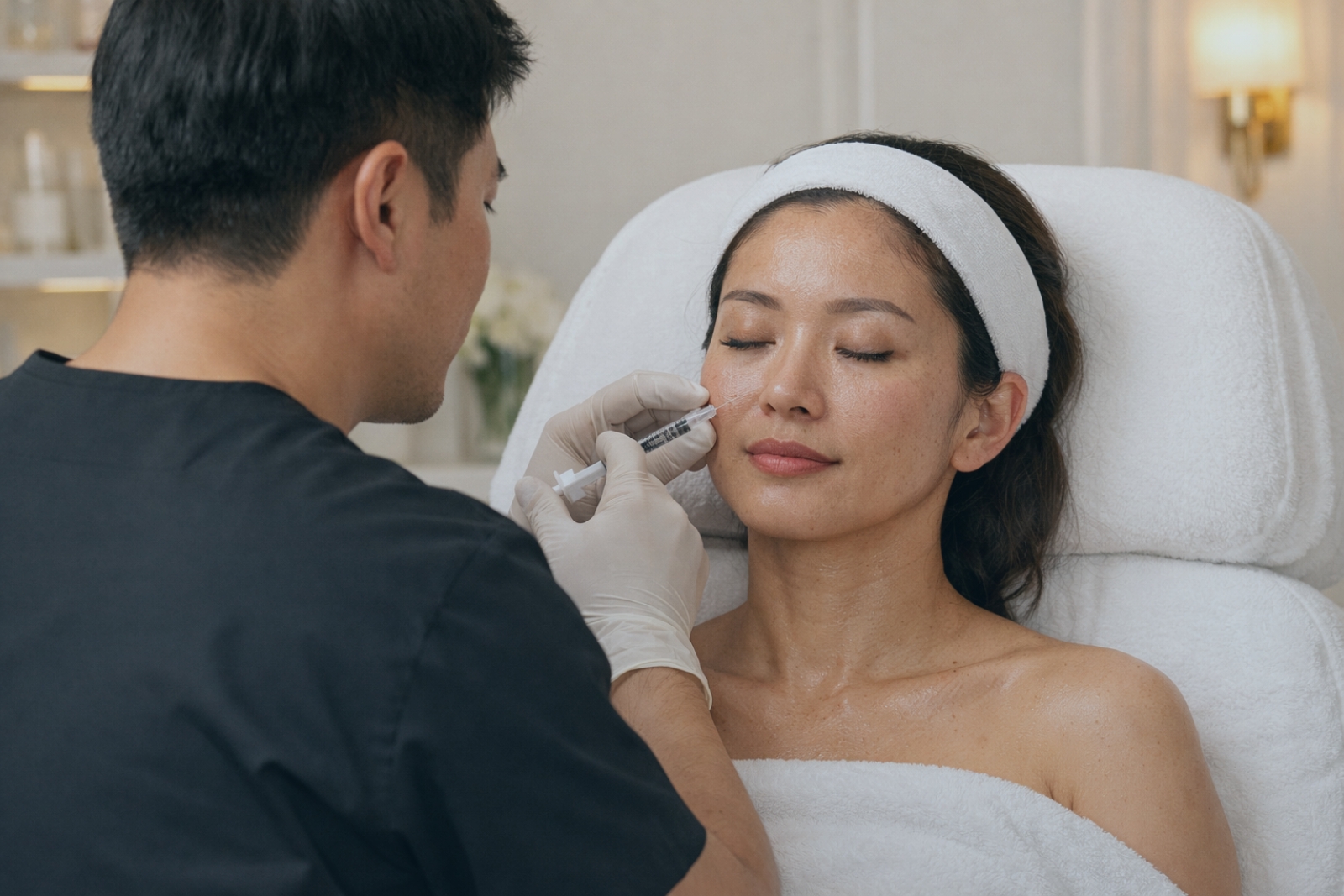
Fine lines, visible pores, under-eye shadows and acne scars can look similar in photographs but need different treatment plans. Tell the doctor which change matters most to you.
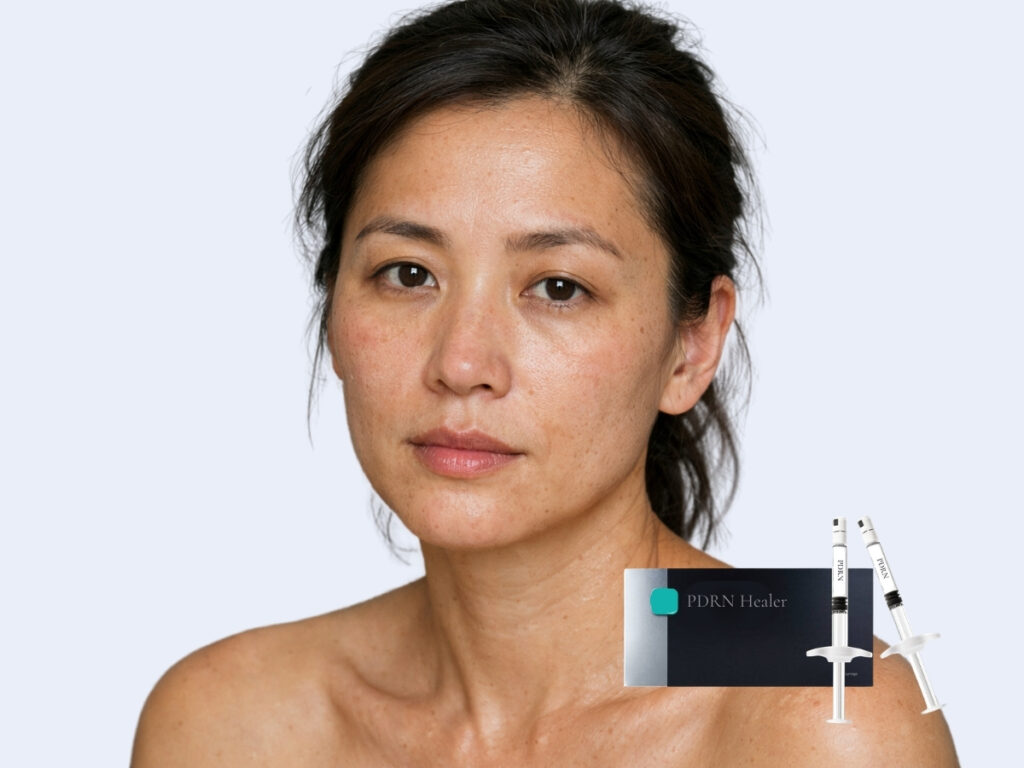
Not sure which category your concern falls into? An assessment can help separate skin texture from pigmentation, volume loss or scarring.
Ask About an AssessmentPN treatment aims to improve skin quality gradually. It does not give a facelift, remove every scar or correct every cause of dark circles. The decision starts with the concern you want to change, the formulation being considered and the recovery you can allow.
The gel is delivered through small injections into the selected treatment area. PN materials have water-binding properties and are studied for their interaction with the skin environment. The aim is a gradual change in skin quality, not an
If a formulation also contains HA, that ingredient contributes water-binding properties. A local anaesthetic can help with discomfort, but it does not remove all pain or injection risks.
These are broad treatment categories. A PN–HA combination contains ingredients from both; the label alone does not tell you which option suits your skin.
The gel is delivered through small injections into the selected treatment area. PN materials have water-binding properties and are studied for their interaction with the skin environment. The aim is a gradual change in skin quality, not an instant change in facial shape.
If a formulation also contains HA, that ingredient contributes water-binding properties. A local anaesthetic can help with discomfort, but it does not remove all pain or injection risks.
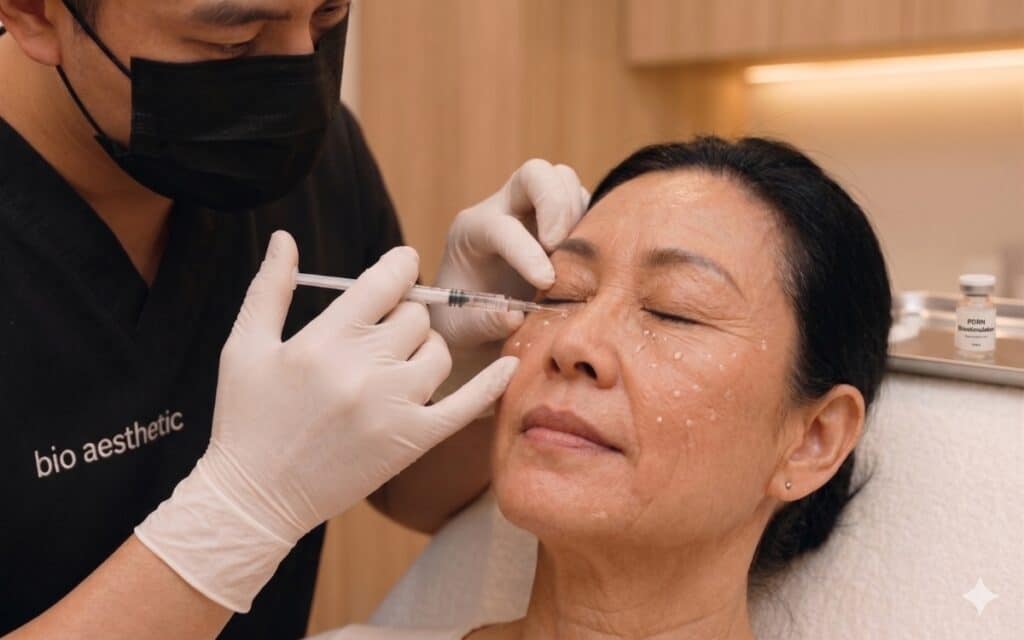
The visible concern helps guide the assessment. It does not automatically decide the injectable.
Discuss whether the concern is mainly at the skin surface, and how you will judge a worthwhile change.
Read related guide → 02Separate crepey texture from hollowing, pigmentation, puffiness or eye bags before choosing treatment.
Read related guide → 03Scar depth and tethering matter. PN alone is not a complete answer for every depressed scar.
Read related guide → 04Compare ingredients, treatment purpose and recovery, rather than choosing from a product name alone.
Read related guide →
The doctor examines your skin and asks what you want to improve. A close-up assessment helps distinguish surface texture from pigment, volume loss, swelling and deeper scars. Previous injectables, medical
Check whether fine lines, pores, scars, pigmentation or volume loss are the main issue.
Consider skin thickness, anatomy and whether a formulation is appropriate for that area.
Review earlier fillers, skinboosters, lasers and any delayed swelling or nodules.
Discuss fish-derived ingredients, local anaesthetics, bleeding tendency, medicines and relevant illnesses.
The doctor examines your skin and asks what you want to improve. A close-up assessment helps distinguish surface texture from pigment, volume loss, swelling and deeper scars. Previous injectables, medical conditions, medicines and allergies can change the recommendation.
The formulation and injection plan should suit the area. Improvement in one area does not predict the same result elsewhere.
Assess fine lines, pore appearance and uneven surface texture.

Check texture, pigmentation, hollowing, fluid retention and eye bags separately.

Identify scar depth, shape and any tethering beneath the skin.

Assess fine texture, skin thickness and the cause of visible lines.

Check dryness, roughness and tightness, and whether irritation is contributing.

Assess fine surface lines, crepey texture and skin thickness.
Tell us whether your main concern is texture, fine lines, under-eye skin or acne scars. We can help arrange an assessment.
Ask which formulation is being used, why it was selected and how the result will be reviewed.
Review your concern, relevant history, alternatives, risks and the proposed treatment course.
Clean the area and use the agreed comfort measures, which may include topical numbing.
Place the selected formulation using the planned technique. Stinging or pressure can still occur.
Explain expected local reactions, aftercare, warning signs and the follow-up arrangement.
The appointment includes assessment, consent, skin preparation, injections and aftercare advice. Allow time for numbing if it is used. Injection time is only one part of the visit; the exact appointment length depends on the area and plan.
Bumps and redness often settle within 24–72 hours. Bruising and under-eye swelling can take longer.
Judge the response after swelling has settled, rather than from the immediate post-injection appearance.
Research schedules have used 3 sessions at 2–4-week intervals; your doctor confirms your schedule.
Some patients consider maintenance after 6–12 months. It is not an automatic requirement.
Small raised points, redness, tenderness or mild swelling can be visible. They are different from the final treatment effect.
Bumps and redness often ease during this period. Under-eye swelling can be more noticeable and may take longer.
Bruising can last about a week or longer in some people. Avoid planning treatment immediately before an important event.
Assess gradual change after the skin has settled, using the same concern and consistent photographs if appropriate for clinical records.
Changes in skin quality develop over weeks rather than immediately. Early puffiness or swelling is not the final result. Review should focus on the original concern, such as fine texture or pore appearance, after the skin has settled.
Published PN studies have used a course of three treatments, with intervals of two to four weeks. That is a research schedule, not a promise that everyone needs the same course. The doctor should agree your number of sessions, spacing and review point before treatment.
The effect is temporary and the amount of improvement varies. Some patients consider maintenance after six to twelve months, but that interval is not a guaranteed duration of benefit. Repeat treatment should depend on your response and whether further injections are worthwhile.
Small studies and different formulations make precise long-term predictions difficult. PN does not replace a scar-release procedure, a volumising filler, treatment for pigmentation or surgery for excess skin. Doing more sessions does not guarantee the result you want.
PN injections can cause temporary local reactions and less common complications. Purification and numbing do not make an injectable risk-free. The doctor should explain the risks of the actual formulation and technique before you decide.
Possible complications include infection, prolonged swelling, persistent lumps, hypersensitivity or allergic reactions, pigment changes and scarring. Injection-related damage to a blood vessel or its blood supply is also a concern that requires urgent assessment. Small studies cannot reliably measure every rare complication.
Products containing HA or local anaesthetic introduce additional ingredient considerations. Tell the doctor about previous reactions and allergies before treatment.
Do not wait for a routine appointment or a WhatsApp reply if symptoms are severe.
Keep the injection sites clean, avoid rubbing them and follow the written instructions for your formulation and treatment area.
No numerical treatment prices are listed here. Ask for a quotation that identifies the formulation, amount, area, proposed sessions and any separate consultation or follow-up charges.
Ask About an Assessment and QuotationPN Healer is used for overall skin-quality concerns. PN HB Plus contains added HA and lidocaine. PN I (Eye) and PN S (Scar) are used for different areas and concerns. The table explains the differences.
| Formulation | Ingredients | Common treatment focus | What to know |
|---|---|---|---|
| PN Healer | PN as the principal injectable ingredient. | Overall skin quality, fine lines and uneven texture. | Not a volumising treatment or a solution for every facial concern. |
| PN HB Plus | PN, hyaluronic acid and lidocaine. | Skin-quality concerns where this combination is appropriate. | Lidocaine may reduce discomfort. It does not make injections painless or automatically improve the result. |
| PN I (Eye) | PN with a thinner consistency. | Selected under-eye skin-quality concerns. | Thinner consistency does not necessarily mean less PN. It does not correct every cause of dark circles. |
| PN S (Scar) | PN in a more viscous formulation. | Selected depressed scars and uneven texture. | Does not remove every scar. Deep or tethered scars may need another procedure. |
Do not assume these options share the same concentration, dose or treatment plan. Ask which formulation is proposed and why. Product names and availability are confirmed during consultation.
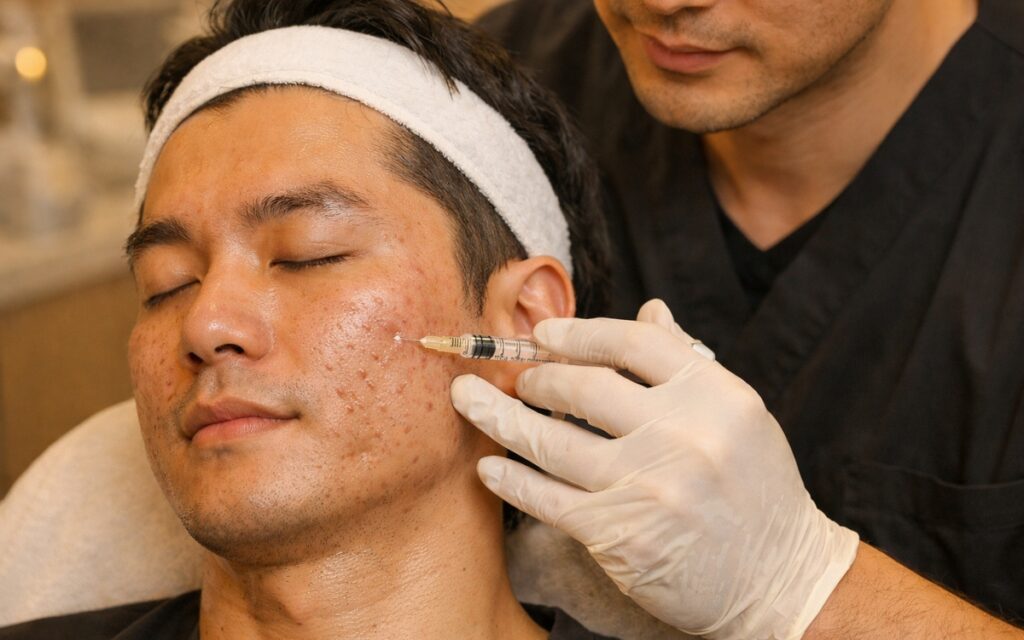
Different treatment categories can overlap in some effects. They are not interchangeable.
If the main problem is hydration, volume loss, a tethered scar or movement lines, PN may not be the first option to discuss.
For hydration-led concerns, discuss an HA skinbooster. For structural hollowing, the assessment is different from treating fine skin texture. Movement lines, pigmentation and excess skin also need their own diagnosis and treatment discussion.
PDLLA-based biostimulatory injectables and other PN systems have different ingredients, properties and treatment considerations. They should not be treated as equivalent doses of the same product, or chosen solely from a stronger-than comparison.
For acne scars, scar type and tethering guide the plan. For delicate periocular skin, an under-eye assessment helps separate texture from other causes of shadows. Choosing no treatment is also an option.

We do not start with a treatment and work backwards. The consultation starts with the concern, what is causing it and whether treatment is likely to help. If another approach makes more sense, that should be part of the discussion too.
Treatment planning starts with the concern, anatomy and relevant medical history — not with a fixed treatment menu.
A treatment should not be presented as the answer to every concern. We explain what it can reasonably change, and what it cannot.
Our clinical pages identify the medical reviewer and the sources used for important medical claims.

A skin-quality injection should not be expected to correct pigmentation, volume loss and scarring in the same way. The assessment needs to identify which concern is actually present.
Under-eye darkness may come from thin-looking skin, pigment, hollowing, visible vessels or swelling. A change in skin quality will not address each cause equally. The same distinction matters with acne scars: a surface-texture concern is different from a scar held down by deeper tissue.
Before proceeding, the consultation should explain why a formulation is being considered, what it is unlikely to change, how recovery will be managed and how the response will be reviewed. A different treatment, a staged plan or no treatment may be more appropriate.
Direct answers about formulations, recovery and treatment choices.
A PN skinbooster is an injectable containing purified polynucleotide material. PN and PDRN are related terms, but the formulations and evidence should not be treated as interchangeable.
Ask for the actual formulation being proposed, rather than relying on the broad term “salmon DNA”. A topical product and an injectable also differ in how and where they are used. Read the PN and PDRN explanation.
Published studies have used three sessions, spaced two to four weeks apart. Your own schedule depends on the formulation, area, response and treatment goal.
The doctor should explain the proposed course and review point before you begin. Three sessions is not a guarantee that you will achieve a particular result or that everyone needs the same number. Review the benefit before agreeing to more treatment.
The effect is temporary. Some patients consider maintenance after six to twelve months, but this is a review window rather than a guaranteed duration of improvement.
Formulations, treatment areas and individual responses differ. Long-term evidence is limited, and a maintenance schedule should depend on whether the original concern improved and whether further injections are worthwhile.
Look for gradual change over the following weeks, after injection swelling has settled. The immediate plumped appearance is not a reliable measure of the final result.
Agree which concern you will assess, such as texture or fine surface lines. Clinical photographs taken in consistent conditions can help the doctor review change. A photograph showing a different light or angle is not a fair comparison.
They can sting, even with numbing cream. Discomfort varies with the area, formulation, injection method and your sensitivity.
Some combination formulations contain lidocaine. That can help with discomfort, but it does not make the procedure painless. Discuss the planned numbing and delivery method if pain is a major concern.
It contains PN, hyaluronic acid and lidocaine, rather than PN alone. The added ingredients change the formulation; they do not make it automatically better for every concern.
HA contributes water-binding properties and lidocaine is a local anaesthetic. The choice should account for the treatment area, intended effect and ingredient sensitivities. There is no basis for assuming that a combination gives everyone a stronger or longer-lasting result.
An under-eye formulation has a thinner consistency for selected delicate-area use. Thinner consistency does not automatically mean a lower PN concentration.
It may be considered for selected periocular skin-quality concerns after assessment. Dark circles can also come from pigmentation, hollowing or visible vessels, while eye bags may have a structural cause. Read about under-eye PN assessment.
Scar-focused PN has a more viscous consistency and may be used in selected scar-treatment plans. It does not remove every acne scar or release a tethered scar on its own.
Ice-pick, boxcar and rolling scars have different structures. Some need a procedure directed at scar depth or tethering rather than an injectable alone. See acne-scar assessment and scar-focused PN information.
Bumps and redness often settle within 24–72 hours. Bruising can last about a week or longer, and swelling around the eyes may take longer to settle.
You may feel able to do routine activities before the injection marks have disappeared. Allow extra time before an important event. Contact the clinic if bumps become more painful, red or swollen, or persist beyond the recovery advice you were given.
Temporary stinging, bumps, redness, swelling and bruising can occur. Infection, persistent lumps, prolonged swelling and allergic reactions are less common concerns.
Severe pain, unusual skin colour changes, sudden visual symptoms or breathing difficulty need urgent medical attention. Do not wait for a routine follow-up or a messaging reply if symptoms are severe.
Tell the doctor before booking. Fish-derived ingredients, local anaesthetic sensitivity, active skin disease, pregnancy, breastfeeding and some medical conditions can change whether treatment is appropriate.
Sensitive skin is not automatically an indication for injections. The doctor needs to understand the diagnosis, medicines, allergies and any earlier injectable reactions. Do not stop prescribed blood-thinning medication without advice from the clinician who manages it.
There is no single best injectable for every skin concern. PN, HA skinboosters and biostimulatory formulations differ in ingredients, purpose, technique and risk.
An HA skinbooster is often considered for hydration and skin quality. PDLLA-based treatments have a different composition and treatment rationale. Other PN products also differ, so equal syringe volumes do not establish equal treatment or results. Ask why the proposed option suits your concern.
Not necessarily. “Needleless” can describe a surface infusion or a pressure-driven delivery device. These are different methods and should not be assumed to give the same result as manual injections.
Ask what material is used and how it reaches the skin. A topical cosmetic treatment is not interchangeable with an injectable PN preparation. Research on a particular jet device does not prove that every needleless facial delivers the same product, depth or effect.
Sometimes, but the combination and timing need an individual plan. More procedures at one visit do not automatically produce a better result.
Tell the doctor about earlier fillers and treatments, including their dates if you know them. Skin condition, the injection area, product instructions and the other procedure affect whether treatments should be combined or separated.
General advice is to avoid strenuous exercise, alcohol and significant heat for the first 24 hours. Wait until injection sites have closed before makeup, following the clinic’s written instructions.
Avoid rubbing or massaging the area unless specifically advised. A more cautious plan may be needed around the eyes or after combined procedures. Follow the instructions for your own treatment rather than a fixed social-media aftercare rule.
The formulation, amount used, treatment area, number of sessions and inclusions affect the quotation. No numerical treatment prices are listed on this page.
Ask whether consultation, numbing, review appointments and any additional procedures are included or separate. A low per-visit quote is not a useful comparison if the amount, formulation or proposed course is different.

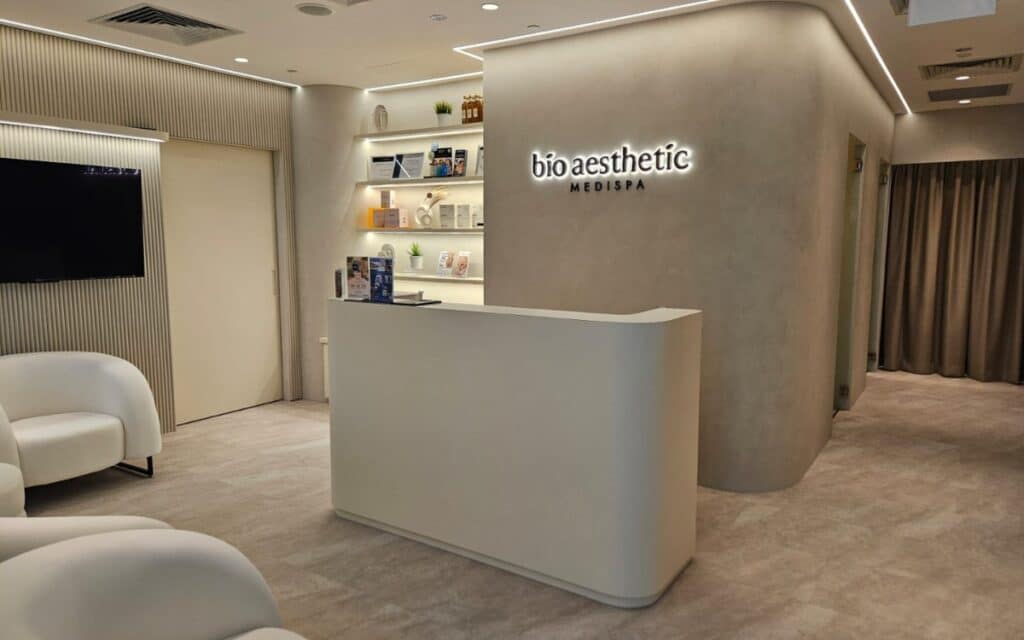
Tell us what you would like assessed. Our team can help with appointment availability and the next step.

Bio Aesthetic Laser Clinic is a doctor-led aesthetic clinic in Singapore with locations in Orchard and Tampines, offering personalised consultation and treatment planning for a range of face and skin concerns.
We are part of the Theresa Holdings group of healthcare brands.

