
Polynucleotide Skin Healer
Rejuvenate Skin Cells | Reverse Skin Damage | Collagen Production
Cost, safety, results and downtime
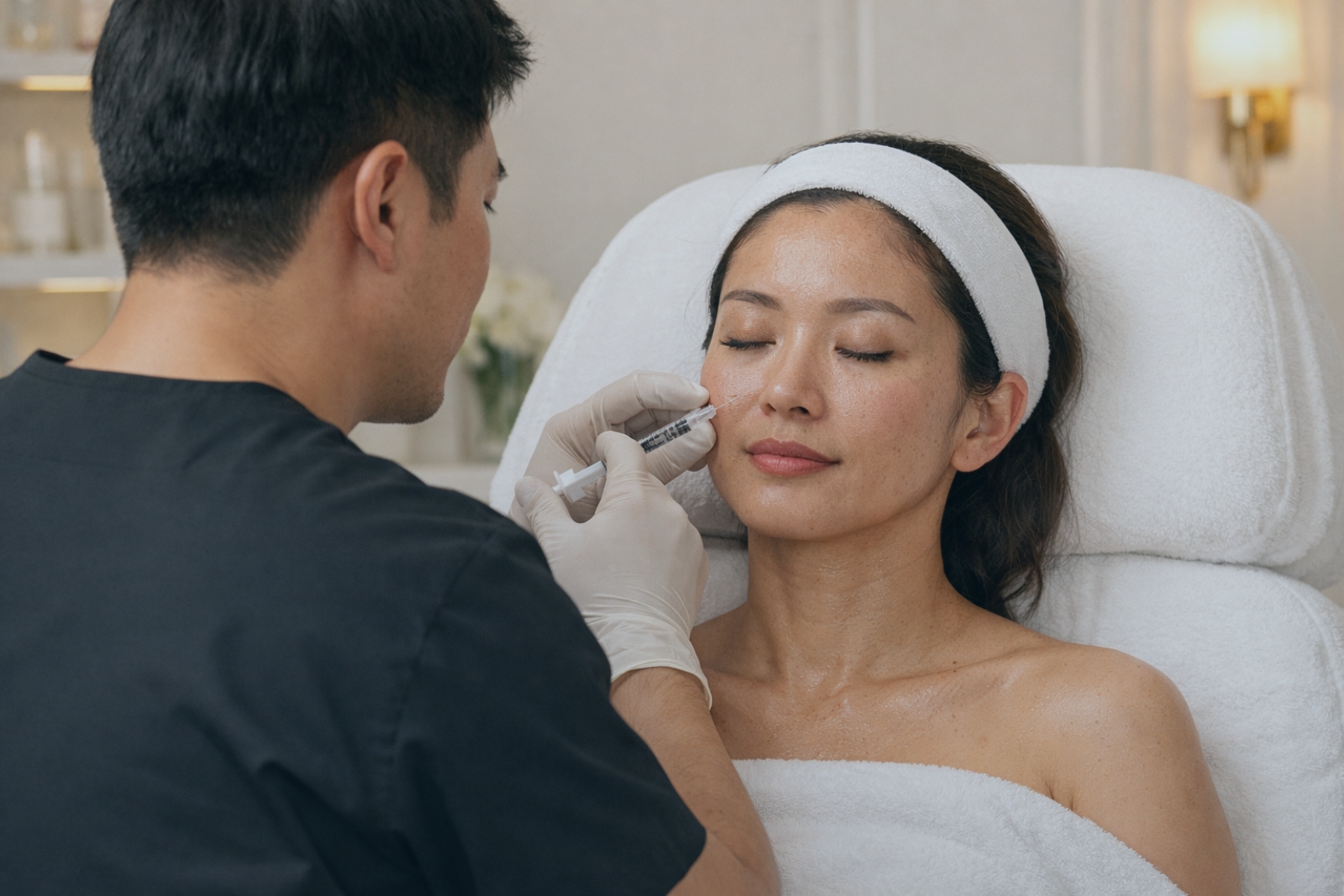
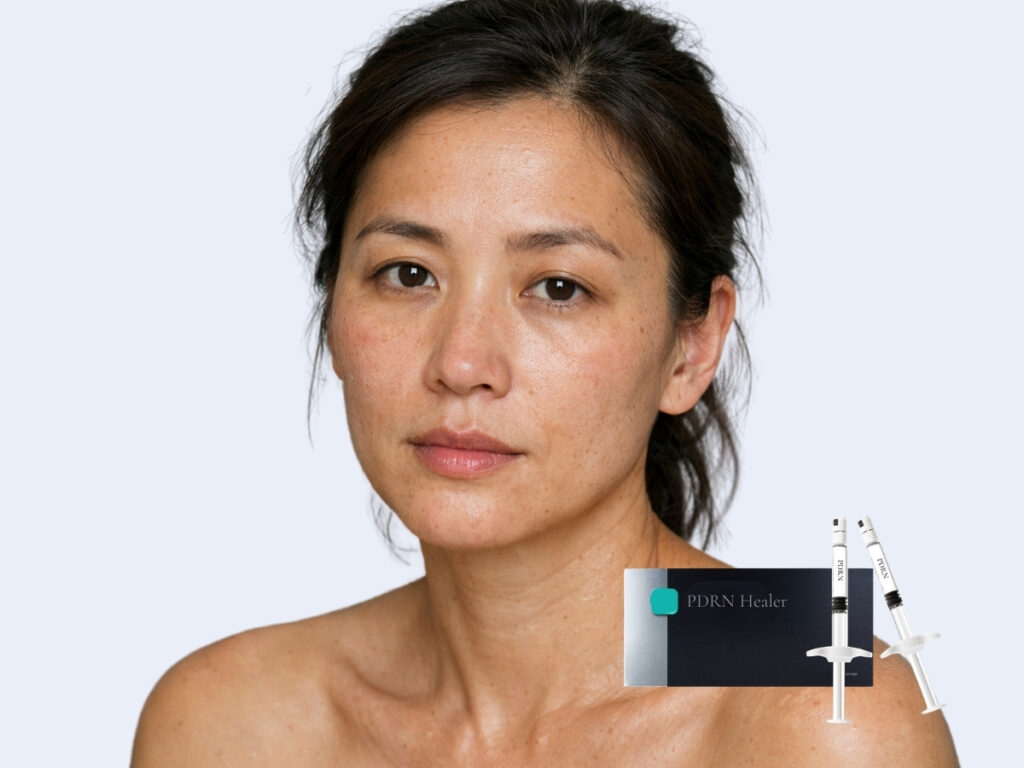
What Is Polynucleotide Skin Healer?
Polynucleotide Skin Healer is an injectable skin treatment commonly discussed for anti-ageing support and skin repair. It contains highly purified polynucleotides (PN), often referred to as salmon DNA–derived fragments, which are used to support skin regeneration and overall skin quality.
Polynucleotide Skin Healer is commonly discussed for:
- skin rejuvenation support
- the skin’s natural healing process
- support for collagen production
- smoother and more supple-looking skin
Because polynucleotides are used to support skin repair and regeneration over time, the treatment is often chosen by patients who want gradual improvement in skin texture, resilience, and overall skin condition.
Polynucleotide Skin Healer at a Glance
Treatment Focus
Skin repair, pores, acne scars, hydration support, and sensitive or damaged-looking skin.
Downtime
Usually limited, with small bumps, redness, or mild swelling that often settle.
Session Planning
Often planned as a series, commonly monthly sessions depending on the treatment plan.
Doctor Review
Suitability depends on skin condition, acne-scar pattern, pore concerns, sensitivity, and treatment goals.
Polynucleotides Skin Booster
Polynucleotides (PN) are components commonly discussed for skin healing, hydration support, and overall skin regeneration in Polynucleotides Skin Healer.
Compared with PDRN, PN is often described as more concentrated and is commonly used when the treatment goal includes skin repair and anti-ageing support.
Polynucleotide treatment is commonly discussed for:
- skin healing and regeneration support
- anti-inflammatory support
- cell repair and wound-healing support
- improved skin elasticity
- overall skin health and resilience
Because it focuses on repair and regeneration, the response is usually gradual rather than immediate, with treatment often planned as a series depending on the skin concern and doctor assessment.
Benefits of Polynucleotide Skin Healer
- Supports skin repair and regeneration
- Commonly discussed for collagen support
- Gradual, natural-looking progression
- Usually limited downtime
- Biocompatible treatment material
- Versatile treatment use for selected pores, texture, acne scar, and sensitive-skin concerns
Treatment Process
- Consultation and assessment to evaluate skin condition and suitability
- Cleansing and topical numbing for comfort
- Injection treatment performed using the planned delivery method
- Post-treatment care instructions provided to support recovery
Recommended Skin Type for Polynucleotides Skin Healer
Polynucleotide Skin Healer is commonly considered for patients with enlarged pores, acne scars, dull or dehydrated skin, and skin-repair concerns where regeneration support is part of the treatment goal.

Enlarged Pores
Commonly discussed for pore refinement and smoother-looking skin texture over time.

Acne Scars
May be considered for selected acne scar concerns where skin repair and regeneration support are treatment goals.

Dull Skin
Often discussed for tired-looking skin that may benefit from improved skin quality and radiance support.

Dry Skin
Commonly considered for skin that needs hydration support and better overall resilience.

Damaged Skin
May be discussed for skin-repair support when texture, healing, or recovery is part of the concern.

Sensitive Skin
Often explored for patients seeking a regenerative approach for delicate or easily irritated skin.
Find out more about Polynucleotide (PN) Healer Singapore
Polynucleotide Healer Details
| Treatment Time | 30 to 60 minutes |
| Recommended Sessions | Often 3 to 6 sessions |
| Recommended Intervals | Usually monthly |
| Recovery Time | Usually limited |
| Price | Enquire Us |
Polynucleotide Skin Healer in Singapore
Polynucleotide Skin Healer is commonly discussed for skin repair, pores, acne scars, and overall skin recovery. It is often considered across a range of skin types, including patients with more delicate or sensitive skin concerns.
The main ingredient, polynucleotide (PN), is commonly used to support skin elasticity, collagen-related repair, and overall skin resilience over time.
In selected cases, the treatment may also be discussed for pore refinement, acne scar support, and skin affected by environmental or UV-related damage where regeneration support is part of the treatment goal.
Polynucleotides Skin Healer Injection
Polynucleotide Skin Healer is commonly discussed for the face, under-eye area, acne scar support, and selected neck or décolletage concerns where skin repair, regeneration, and overall skin-quality improvement are part of the treatment goal.
Where Can Polynucleotide Skin Healer Be Applied?
Forehead & Frown Lines
Polynucleotide Skin Healer may be considered for selected forehead and frown-line concerns where skin repair, smoother-looking texture, and overall skin-quality support are part of the treatment goal.

Polynucleotide Skin Healer for Forehead
- Polynucleotide-based skin repair support
- Commonly discussed for forehead texture and fine lines
- Often planned as 3 to 4 sessions, 4 weeks apart
- Maintenance may be reviewed at 6 to 12 months
Under Eye
The under-eye area is delicate and often discussed when the concern includes fine lines, dryness, or reduced elasticity. A softer polynucleotide formulation may be considered for this area in selected cases.
Polynucleotide I for Under Eye
- Softer polynucleotide formulation
- Commonly discussed for the under-eye area
- Often planned as 3 to 4 sessions, 4 weeks apart
- Maintenance may be reviewed at 6 to 12 months
Nose Lines
Polynucleotide Skin Healer may also be considered for selected nose-line or bunny-line concerns where skin repair and smoother-looking texture are part of the treatment plan.
Polynucleotide Skin Healer for Nose Lines
- Commonly discussed for selected fine line concerns
- Supports skin repair and regeneration
- Often planned as 3 to 4 sessions, 4 weeks apart
- Maintenance may be reviewed at 6 to 12 months
Acne Scars
For selected acne scars, a more targeted polynucleotide formulation may be considered where scar healing, regeneration, and texture support are part of the treatment goal.
Polynucleotide S for Acne Scars
- More viscous scar-focused formulation
- Commonly discussed for selected acne scar concerns
- Often planned as 3 to 4 sessions, 4 weeks apart
- Maintenance may be reviewed at 6 to 12 months
Décolletage
Polynucleotide Skin Healer may be considered for selected neck and décolletage concerns where dryness, fine lines, and reduced skin quality are part of the treatment goal.
Polynucleotide Skin Healer for Décolletage
- Commonly discussed for neck and chest-area skin quality
- May support hydration and regeneration
- Often planned as 3 to 4 sessions, 4 weeks apart
- Maintenance may be reviewed at 6 to 12 months
Polynucleotides Skin Healer Singapore Price
In line with healthcare advertising requirements in Singapore, the exact price range for Polynucleotide Skin Healer is not publicly displayed. Please WhatsApp us for more information.
Final pricing is determined during consultation, based on the treatment area, product selection, and treatment plan.
| Type | Benefits |
|---|---|
| PDRN Healer | Overall skin repair and rejuvenation |
| PDRN I (Eyes) | Under-eye repair support for fine lines and elasticity |
| PDRN S (Acne Scar) | Focused acne-scar remodeling support |
CONSULT OUR DOCTOR FOR A CUSTOMISED SOLUTION
ASK ABOUT PN SKIN HEALERCompare types of Polynucleotide Injection
Polynucleotide S
Polynucleotide (PN) S is a more targeted formulation commonly discussed for acne scar treatment. It contains polynucleotides (PN), which are used to support skin healing, collagen stimulation, and tissue repair.
Because of its treatment focus, PN S is often considered for selected acne scar treatment plans where regeneration and scar remodelling are part of the goal.
Polynucleotide I
Polynucleotide (PN) I is a softer formulation commonly discussed for the delicate eye area. It may be considered for fine lines, wrinkles, and overall skin-quality support around the eyes.
Like other polynucleotide treatments, it is used to support skin healing and regeneration and is commonly delivered through precise microinjections in a way similar to selected skin boosters.
| Comparison Point | Polynucleotide Healer | Polynucleotide I | Polynucleotide S |
|---|---|---|---|
| Suitability | Overall skin healing and rejuvenation | Under-eye treatment area | Selected acne scar concerns |
| Concentration | Standard PN formulation | Softer / lower concentration formulation | More targeted scar-focused formulation |
| Viscosity | Medium viscosity | Lower viscosity | Higher viscosity |
| Common Goals | Skin repair, elasticity, and wrinkle support | Fine lines and delicate eye-area support | Scar remodeling and skin repair support |
| Benefits | Skin healing and anti-inflammatory support | Eye-area skin-quality support | Support for selected acne scar treatment plans |
Injectable Moisturiser vs Polynucleotide Skin Healer

Injectable Moisturiser vs Polynucleotide Skin Healer
Compared to injectable moisturiser, Polynucleotide Skin Healer is more commonly discussed for skin repair, pore concerns, and superficial skin recovery, while injectable moisturiser is more often chosen for hydration and skin laxity support.
- Injectable moisturiser — commonly discussed for hydration, skin laxity, and collagen / elastin support
- Polynucleotide skin healer — commonly discussed for skin repair, pore refinement, and selected fine-line concerns
- Injectable moisturiser — often planned with fewer injection points in the lower face
- Both treatments — may be discussed together in selected anti-ageing treatment plans
In practice, the more suitable option depends on whether the main concern is hydration and firmness, or repair, pores, and regenerative skin support. In selected cases, both may be combined as part of a broader doctor-led treatment plan.
Polynucleotide Skin Healer Side Effects
After Polynucleotide Skin Healer treatment, some temporary skin reactions may occur while the area settles. Common short-term effects can include small bumps at the injection points, mild swelling, redness, tenderness, or slight bruising.
Less common but possible risks may include prolonged swelling, irritation, unevenness, infection, or delayed settling depending on skin response, injection technique, and aftercare.
A proper consultation, suitable treatment selection, and careful aftercare can help reduce the likelihood of complications.
Polynucleotide Skin Healer Aftercare Guide
After Polynucleotide Skin Healer treatment, patients are usually advised to keep the treated area clean, avoid unnecessary pressure, and follow the doctor’s aftercare instructions carefully while the skin settles.
- avoid rubbing or massaging the treated area unless advised otherwise
- avoid strenuous exercise, saunas, or excessive heat for a short period if advised
- avoid makeup over the injection points for the recommended period
- keep follow-up appointments to review treatment response and future sessions
If there is increasing pain, unusual swelling, or prolonged bumps that do not settle as expected, a medical review is advisable.
Polynucleotide Healer vs Skin Booster vs Dermal Fillers?
Skin boosters and dermal fillers are both commonly associated with hyaluronic acid, but they are usually chosen for different goals. Skin boosters are more often discussed for hydration and skin quality, while dermal fillers are mainly used for contour and volume support.
Polynucleotide Skin Healer is different because its main active component is polynucleotide rather than hyaluronic acid. It is commonly discussed for skin repair, regeneration, and collagen support rather than only hydration or reshaping.
In selected cases, skin boosters may also be discussed together with Polynucleotide Skin Healer when the treatment goal includes both hydration and skin-repair support.
- Skin booster — mainly discussed for hydration and skin brightening
- Dermal fillers — mainly discussed for contour, reshaping, and volume support
- Polynucleotide Skin Healer — mainly discussed for healing, regeneration, and collagen support

| Comparison Point | Polynucleotide Skin Healer | Skin Booster | Face Fillers |
|---|---|---|---|
| Main Ingredient | Polynucleotide | Hyaluronic acid | Hyaluronic acid |
| Price Guide | From S$650 | From S$880 | From S$498 |
| Main Benefits | Skin repair, regeneration, collagen support | Hydration, glow, skin quality support | Contour, asymmetry support, volume restoration |
| Result Timing | About 2 to 3 weeks | About 3 to 4 weeks | Usually visible soon after |
| Typical Sessions | Often 4 sessions | Often 4 sessions | Often 1 session |
Am I suitable for Polynucleotide (PN) Skin Healer?
Who Is Polynucleotide Skin Healer For?
Polynucleotide Skin Healer may be considered for selected men and women who want skin regeneration support with usually limited downtime.
It is also commonly discussed for patients with acne-related skin concerns, post-laser recovery support, blemish-prone skin, and age-related changes such as reduced elasticity, fine lines, and wrinkles.
How Long Does Polynucleotide Skin Healer Last?
Results are often discussed as developing gradually over the weeks following treatment, with maintenance depending on the skin condition, treatment area, and overall treatment plan.
A series is commonly recommended first, and follow-up timing is usually reviewed based on individual response and doctor assessment.
Polynucleotide Skin Healer Before and After
Before-and-after photographs cannot be publicly displayed. Please contact us if you would like more information about treatment expectations, suitability, and how Polynucleotide Skin Healer may be planned for your concerns.
FAQs about Polynucleotide Skin Healer
Essential questions for your polynucleotide skin healer consultation include:
- What are my realistic expectations?
- How many sessions will I need?
- What’s the recommended treatment schedule?
- Are there any specific aftercare requirements for my skin type?
- What are the potential risks in my case?
- How do you ensure product authenticity?
- What’s your experience with polynucleotide treatments?
These questions help ensure informed decision-making.
The choice between polynucleotide skin healer variants depends on your specific concerns and treatment areas.
Standard Healer addresses general aging and skin quality, Type S concentrates on scar improvement and deeper repair, while Type I focuses on the delicate eye area.
During consultation, our doctors assess your skin condition, concerns, and goals to recommend the most appropriate polynucleotide formulation for optimal results.
Unlike traditional dermal fillers that add volume, polynucleotide skin healer works as a bio-stimulator, activating your skin’s natural regenerative processes.
While fillers provide immediate volume replacement, polynucleotides gradually improve skin quality, texture, and elasticity from within.
The results develop over time and tend to look more natural as they enhance your skin’s own healing mechanisms rather than simply filling spaces.
Polynucleotide skin healer is not suitable for pregnant or breastfeeding women, individuals with active skin infections, autoimmune conditions affecting healing, or those with keloid scarring tendencies.
People who have taken isotretinoin within 6 months, have overly sensitive skin conditions like eczema, or recent chemical peels should also avoid treatment.
A thorough medical consultation determines suitability.
After polynucleotide skin healer treatment, apply gentle moisturizer and broad-spectrum sunscreen daily.
Avoid harsh skincare products, excessive heat (saunas, hot yoga), and direct sun exposure for 48 hours.
Don’t massage or apply pressure to treated areas for 24 hours. Stay hydrated and maintain a healthy skincare routine to support the healing process.
Follow-up appointments help monitor progress.
Before polynucleotide skin healer treatment, avoid blood-thinning medications (if medically safe to do so), alcohol consumption for 24 hours, and intensive sun exposure for one week prior.
Arrive with clean skin, no makeup, skincare products, or cosmetics.
Inform your doctor of any recent treatments, medications, or skin conditions. A thorough consultation will be conducted to ensure you’re an ideal candidate.
Yes, polynucleotide skin healer can often be combined with complementary treatments for enhanced results.
Popular combinations include pairing with laser treatments, chemical peels, or other skin boosters, though timing and sequence matter.
Our doctors at Bio Aesthetic Clinic Singapore will assess your skin condition and recommend the optimal treatment combination and scheduling to maximize benefits while ensuring safety.
Initial improvements from polynucleotide skin healer typically appear after 2-3 weeks as cellular regeneration begins.
Progressive enhancement continues over 6-8 weeks as collagen production increases.
Peak results are usually visible after 2-3 months, with continued improvement for up to 6 months as the polynucleotides continue stimulating natural healing processes.
Recovery from polynucleotide skin healer is generally minimal. Most patients experience slight redness and mild swelling for 24-48 hours post-treatment.
You can typically return to normal activities immediately, though we recommend avoiding intense exercise for 24 hours.
Some patients notice a temporary “tightening” sensation as the polynucleotides begin working—this is normal and indicates the healing process has started.
The polynucleotide skin healer procedure typically takes 30-45 minutes per session, including consultation and post-treatment care.
The actual injection process usually requires 15-20 minutes, depending on the treatment area size.
At Bio Aesthetic Clinic Singapore, our experienced doctors ensure comfortable treatment timing while maintaining thorough safety protocols throughout each session.
Polynucleotide Skin Healer Near You
Tampines Clinic
Income @ Tampines Junction, 300 Tampines Avenue 5 #04-05, Singapore 529653
Consult our Doctors for Polynucleotide Skin Healer

Dr Daniel Khaw

Dr Justin Goh

Dr Vijay Sampath
Make an Appointment
Call Us Today! +65 6333 4566 • hello@bioaesthetic.com.sg
This site is protected by reCAPTCHA and the Google Privacy Policy and Terms of Service apply.
Disclaimer: The information on this page is provided for general educational and informational purposes only and should not be relied on as medical, diagnostic, or treatment advice. Content may not be exhaustive, may not apply to every individual, and should not replace a consultation with a qualified doctor. While reasonable care is taken in preparing this content, Bio Aesthetic Laser Clinic and its related parties do not accept liability for any loss, damage, or consequences arising from reliance on the information presented on this page. Suitability for any treatment should always be assessed during a proper medical consultation.