
Subcision
Acne scar treatment that releases tethered scars beneath the skin and may be combined with other acne scar procedures.
Subcision price from $400
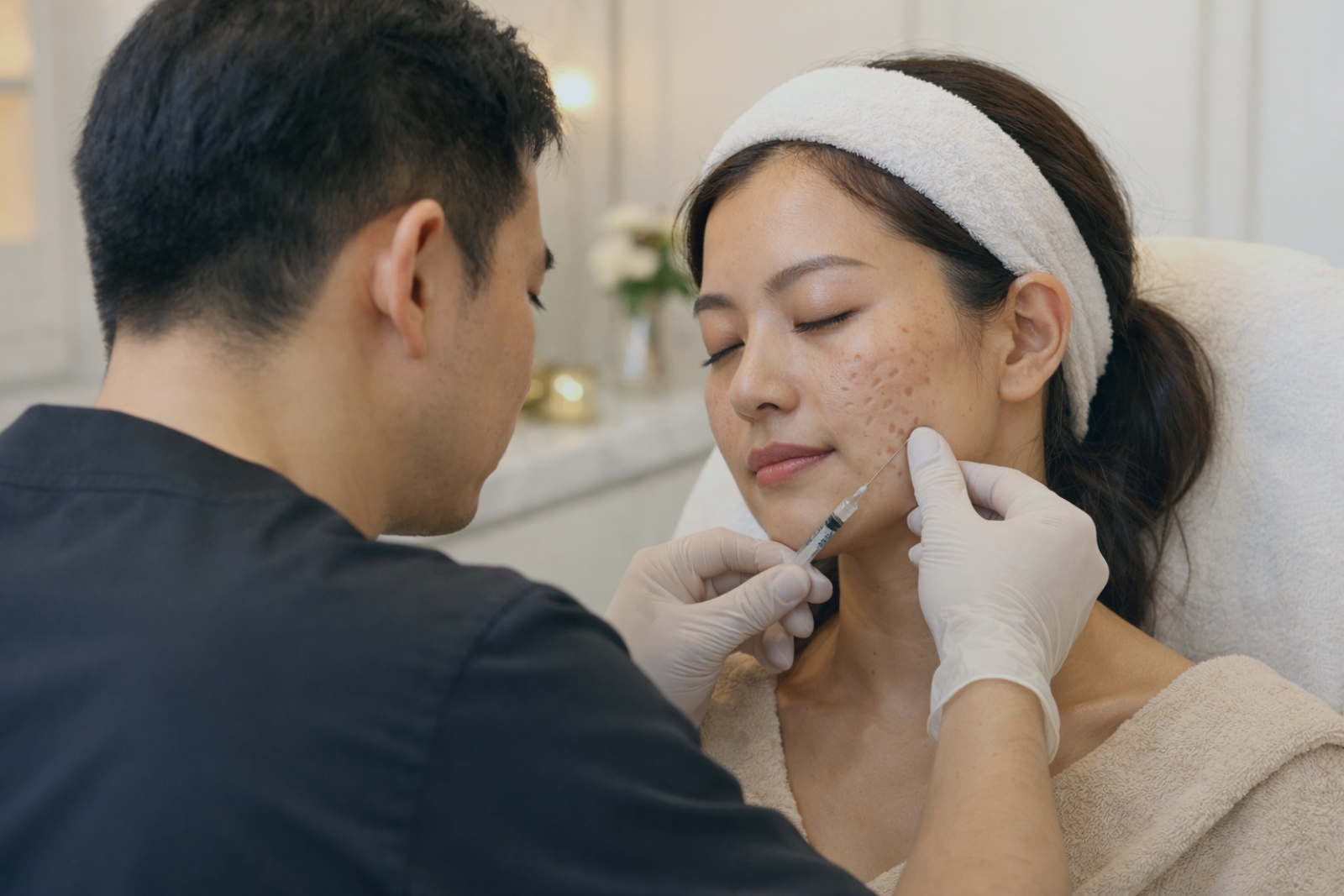

What Is Subcision for Acne Scars?
Subcision is a doctor-led acne scar treatment in Singapore used to release fibrous bands beneath the skin that pull certain scars downward. It is most commonly considered for tethered scars such as rolling acne scars and selected depressed scar patterns.
By releasing these deeper attachments, the treated area may sit more evenly with the surrounding skin over time. Subcision is often used as part of a combination acne scar plan with treatments such as Fractional CO2 Laser and Polynucleotide S, depending on scar type and treatment goals.
Subcision may also be explored for selected rolling scars, chickenpox scars, and other tethered depressed scars where deeper scar release is part of the treatment plan.
Bruising can occur after the procedure and may take around 1 week to fade. During recovery, collagen remodelling continues beneath the skin, which may help improve the appearance of the depressed area over time.
Potential Benefits of Subcision
- Release of tethered rolling scars
- Improvement in selected depressed acne scars
- Can be combined with other acne scar treatments
- Collagen remodelling as the skin heals
- Doctor-led planning based on scar type and severity
Subcision at a Glance
Treatment Focus
Subcision is commonly considered for tethered acne scars, especially rolling scars and selected depressed scar patterns.
Procedure Time
Often about 30 minutes, depending on the number of scars treated and the treatment area.
Recovery
Bruising and swelling can occur after treatment, with visible recovery often settling over several days to around 1 week.
Session Planning
A series may be recommended depending on scar depth, scar type, and whether subcision is combined with other acne scar treatments.
Does Subcision Work?
Deep acne scars are often linked to two main factors: loss of collagen support and fibrous bands beneath the skin that pull the scar downward, creating a depressed appearance.
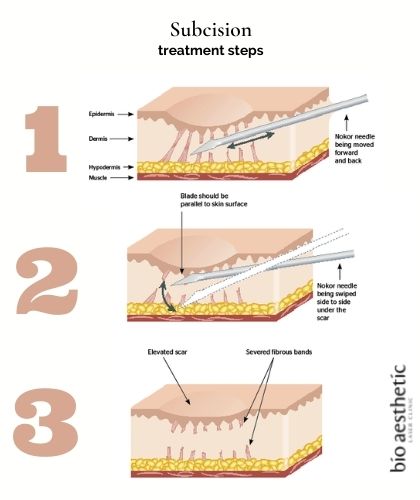
Subcision works by using a specialised needle to release these fibrous bands beneath the skin. Once the tethering is released, the depressed area may sit more evenly with the surrounding skin over time.
During healing, the treatment also triggers a natural repair response in the treated area, which may support collagen remodelling and further improvement in scar appearance.
For selected cases, subcision may be combined with treatments such as Fractional CO2 Laser or Polynucleotide S as part of a broader acne scar treatment plan.
At Bio Aesthetic Laser Clinic, treatment suitability is assessed by our doctors based on scar type, scar depth, and the most appropriate combination approach.
Subcision Benefits
- No laser-related heat exposure during treatment
- Commonly considered for deep rolling scars and tethered scars
- May show visible improvement from early sessions
- Suitable for selected depressed acne scar patterns
- Can be combined with other acne scar treatments
Subcision Details
- Doctor assessment based on scar type, severity, and treatment goals
- About 30 minutes of subcision treatment in many cases
- Performed by a doctor as part of a tailored acne scar plan
- Bruising and swelling can occur during recovery
Recommended Acne Scars for Subcision
Subcision is most commonly considered for rolling acne scars and other tethered depressed scars. It may also be explored for selected boxcar scars as part of a doctor-led acne scar treatment plan. Ice pick scars often require a different primary treatment approach, although combination planning may still be considered in selected cases.
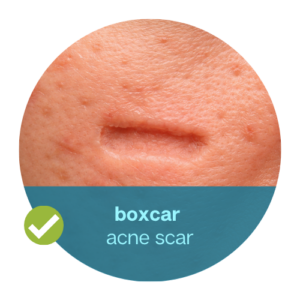
Boxcar Acne Scar
May be considered in selected cases depending on scar depth, edge definition, and whether tethering is present.
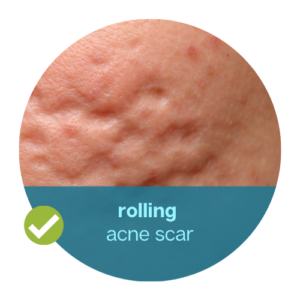
Rolling Deep Scar
Often the strongest indication for subcision, especially where deeper fibrous bands pull the skin downward.
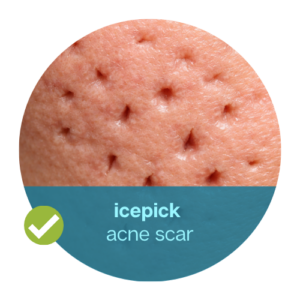
Ice Pick Acne Scar
Usually not the main indication for subcision alone and often assessed for other or combination acne scar treatments.
Subcision acne scar treatment
Subcision Singapore
| Time | ~30 mins |
| Sessions | Usually 2 to 3 |
| Intervals | Often every 4 weeks |
| Recovery | Swelling 2–3 days; healing up to 10 days |
| Price | From S$400 |
Is Subcision Safe?
Subcision is commonly considered a suitable acne scar treatment when performed for the right scar type and after proper doctor assessment. Because it works beneath the skin to release tethered scar bands rather than using laser heat on the surface, it is often explored for rolling scars and selected depressed scars where deeper scar release is needed.
It is not a one-size-fits-all treatment, which is why scar diagnosis remains important before treatment. For patients with active skin infection, a tendency to form keloids, or certain bleeding-related concerns, subcision may not be the most appropriate option.
In suitable cases, it is often planned as a short in-clinic procedure with a series of sessions depending on scar severity. Bruising and swelling can occur during recovery, but treatment is generally chosen for its role in releasing deeper scar tethering with relatively manageable downtime.
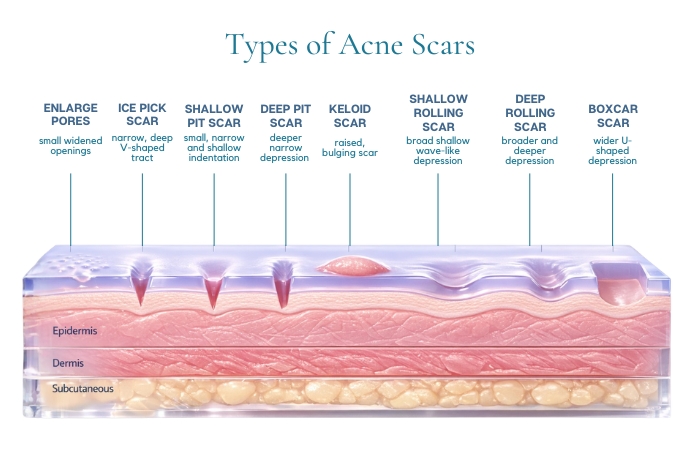
What are the types of Acne Scars?
Subcision is most commonly considered for rolling acne scars and selected tethered, depressed scars. It may also be part of a broader acne scar plan when different acne scar types need different treatment approaches.
Subcision in Depth
Rolling Scars
Rolling scars are often the main indication for subcision because they are commonly tethered beneath the skin by fibrous bands. These scars usually have sloping edges and can make the skin appear uneven under light.
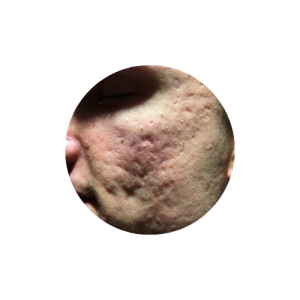
Recommended for Rolling Scars
- Commonly considered for tethered rolling scars
- Helps release deeper scar attachments beneath the skin
- Often paired with Fractional CO2 Laser or Rejuran S
- May be planned as part of a multi-session acne scar strategy
Boxcar Scars
Boxcar scars are depressed scars with more defined edges. In selected cases, subcision may be considered if deeper tethering is present, but many boxcar scars are more often treated with resurfacing or targeted scar-regeneration approaches.
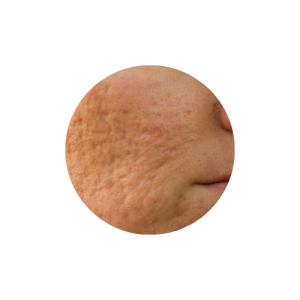
Selected Cases May Need Other Options
- May be considered if scar tethering is present
- Often assessed alongside resurfacing-based treatments
- Fractional CO2 Laser may be explored for surface remodelling
- Rejuran S may be added in selected plans
Ice Pick Scars
Ice pick scars are narrow, deeper scars that extend vertically into the skin. These scars are usually not the main indication for subcision alone and often require a different primary treatment approach.
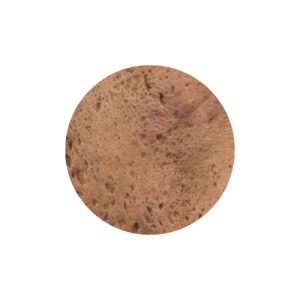
Usually Better Treated with Other Methods
- Often not the main indication for subcision alone
- TCA CROSS may be considered in selected cases
- Punch techniques may be discussed for deeper narrow scars
- Combination planning may still be useful for mixed scar patterns
What is the price and cost of Subcision Singapore
Acne Scar Treatment Price in Singapore
| TYPE | PRICE |
|---|---|
| Subcision | S$400 |
| Fractional CO₂ Laser | S$398 |
| Rejuran S | S$500 |
| TCA CROSS | S$400 |
| Cortisone Acne Injection | S$100 per pimple |
| Keloid Injection | S$100 per scar |
CONSULT OUR DOCTOR FOR A CUSTOMISED SOLUTION
ASK ABOUT SUBCISIONDifference between Subcision and other acne scar treatments
Identify the Scar Type First
Choosing the most suitable acne scar treatment starts with identifying the scar type correctly. Broadly, acne scars are grouped into two main categories:
- Atrophic scars – caused by collagen loss, including rolling scars, boxcar scars, and ice pick scars
- Hypertrophic scars – caused by excess collagen, including raised scars and keloids
Most acne scars are atrophic scars, which appear sunken or uneven on the skin. Different scar patterns often respond better to different treatment methods.
Fractional CO2 Laser is commonly considered for broader atrophic acne scar concerns, while subcision may be more relevant for selected rolling scars where deeper tethering is present.
This is why proper doctor assessment is important before treatment, especially when the skin shows a mix of scar types rather than just one pattern.
| Factor | CO₂ Laser | RF Microneedling | Chemical Peel | Subcision | Dermal Fillers |
|---|---|---|---|---|---|
| Best for | Broader atrophic scars, resurfacing, texture improvement | Rolling scars, boxcar scars, pores, deeper collagen remodelling | Selected superficial scars and skin renewal | Tethered rolling scars and selected depressed scars | Selected depressed scars needing temporary volume support |
| Downtime | Usually 5–7 days | Usually 3–5 days | Usually 1–2 days | Usually 4–10 days | Usually 1–2 days |
| Price guide | S$398 – S$800 | S$980 | S$98 – S$350 | S$400 | S$200 – S$700 |
| Typical sessions | 3 – 6 sessions | 1 – 3 sessions | 2 – 4 sessions | 2 – 4 sessions | 1 – 3 sessions |
| Results profile | Often part of a longer-term acne scar plan | Often part of a collagen-focused acne scar plan | Usually more superficial and maintenance-focused | Often used for scar release in selected rolling scars | Usually temporary and volume-focused |
| Common scar types | Atrophic scars including rolling, boxcar, and selected ice pick scars | Atrophic scars, especially rolling and selected boxcar scars | Selected superficial scar concerns | Shallow rolling scars and selected boxcar scars with tethering | Selected depressed scars requiring temporary lifting support |
Subcision Treatment and Procedure
How Is Subcision Performed?
Before treatment, a full doctor assessment is carried out to identify the acne scar type, assess tethering beneath the skin, and determine whether subcision is suitable for the area of concern.
During the procedure, a specialised needle is inserted beneath the skin to release the fibrous bands that pull certain scars downward. This helps free the depressed scar and may allow the skin surface to sit more evenly over time.
Different needles may be used depending on the scar pattern and treatment plan. Often, a Nokor needle is used because it is designed for scar-release procedures.
After treatment, topical medication may be applied as part of aftercare. Swelling and bruising can occur and may take several days to about 1 week, or longer in selected cases, to settle.
For some patients, subcision may be combined with other acne scar treatments like fillers, Rejuran, or Fractional CO2 Laser as part of a broader collagen-stimulating acne scar plan.
Subcision Side Effects
After subcision, temporary bruising, swelling, tenderness, or mild discomfort may occur while the treated area heals. These effects are expected because the procedure works beneath the skin to release tethered scar bands.
Less common but possible risks may include prolonged bruising, infection, irregular healing, persistent swelling, or temporary lumpiness depending on skin response, aftercare, and the treatment area.
A proper consultation, suitable treatment planning, and careful aftercare can help reduce the likelihood of complications.
Subcision Aftercare Guide
After subcision, the treated area may appear bruised, swollen, or tender for several days while the skin settles. Gentle care, sun protection, and avoiding unnecessary pressure or rubbing over the treated area are important during recovery.
Avoid picking, massaging, or irritating the area unless specifically advised by your doctor. If topical medication or aftercare products are prescribed, they should be used as directed to support healing.
Recovery varies depending on the treatment area, scar severity, and whether subcision was combined with other procedures. If you notice increasing redness, discharge, unusual pain, or delayed healing, medical review is advisable.
What acne scar treatment can be combined with Subcision?
Subcision in Combination Acne Scar Plans
Subcision is often used as part of a combination acne scar treatment plan, especially when deeper scar tethering is present alongside surface texture concerns.
Subcision and Fractional CO₂ Laser
Fractional CO₂ Laser may be combined to address surface texture, while subcision releases deeper scar tethering beneath the skin. This combination is often considered when both scar depth and surface irregularity need to be treated together.
Subcision and Rejuran S
Rejuran S may be paired in selected cases as part of a scar-regeneration plan. It is often explored when additional support for collagen remodelling and depressed scar improvement is needed.
Subcision and Fillers
Dermal filler may be considered in selected cases to provide temporary lifting support for depressed scars. This is usually explored when a patient wants more immediate cosmetic improvement or when filler is used as part of a broader acne scar strategy.
Subcision and RF Microneedling
RF microneedling may also be combined with subcision when deeper collagen stimulation, pore refinement, or additional skin remodelling is part of the treatment goal. This can be useful where both tethering and textural irregularity are contributing to the scar appearance.
Am I suitable for Subcision?
Who Is Subcision For?
- Patients with rolling scars and deeper tethered acne scars
- Patients looking for a scar-release treatment with no laser-related heat exposure
- Patients seeking a doctor-led acne scar plan that may be combined with other treatments
Results After One Session
After subcision, redness, swelling, and bruising can occur during the early recovery period. Swelling often settles within a few days, while bruising may take several days to around 1 week, or longer in selected cases, to fade.
Improvement is usually gradual rather than immediate, as collagen remodelling continues over time. In many cases, subcision is combined with other acne scar treatments as part of a broader treatment plan.
Can I Use Medisave?
Subcision is generally considered an aesthetic treatment and is not typically claimable through Medisave. Payment eligibility depends on whether a procedure is classified as cosmetic or medically necessary.
FAQs about Subcision Singapore
According to new study, having subcision acne scar therapy while taking Accutane or Oratane is safe. This implies that patients do not need to wait the 6 to 12 month washout period before having scar revision surgery.
The earlier acne scars are treated, the better the eventual acne scar outcomes will be. Acne scar prevention produces the best outcomes because patients avoid the discomfort, expense, and downtime associated with acne scar revision.
In most cases, 2-4 subcision procedures spaced around 4 weeks apart to treat acne scars. The result is highly dependent on individuals, type of scar, depth of the scar, and skin type.
After the first session, you should experience positive effects. You may need a few more sessions to repair your acne scars, depending on the type of scar and how deep it is.
It is advised to combine your subcision treatment with other acne scars treatment such as
Fractional CO2 Laser (Collagen Production) – to heal acne scars faster
Fillers – Temporary fix for acne scars to “fill” up the depressed area. Results are not permanent.
The majority of patients tolerate subcision well. To reduce discomfort, the procedure is performed under local anaesthetic. Before the treatment, numb cream will be applied on the face to ensure comfort.
The costs / price of subcision acne scar treatment is listed as follow:
Acne Scar Treatment – Transparent Pricing
| TYPE | SINGLE |
| Subcision | $400 |
| Fractional Co2 Laser | $398 |
| Rejuran S | $400 |
| TCA Cross | $400 |
| Cortisone Acne Injection | $100 / pimple |
| Keloid Injection | $100 / scar |
Recovery time for Subcision
There will be some redness and swelling for the first 2-3 days following subcision procedure. Following therapy, there is very little pain. After the operation, bruising is usual and will disappear in 2-10 days, depending on your recovery and skin type. Generally the recovery time for subcision will be less than 10 days.
Contact Us Book NowSubcision Near You

Tampines Clinic
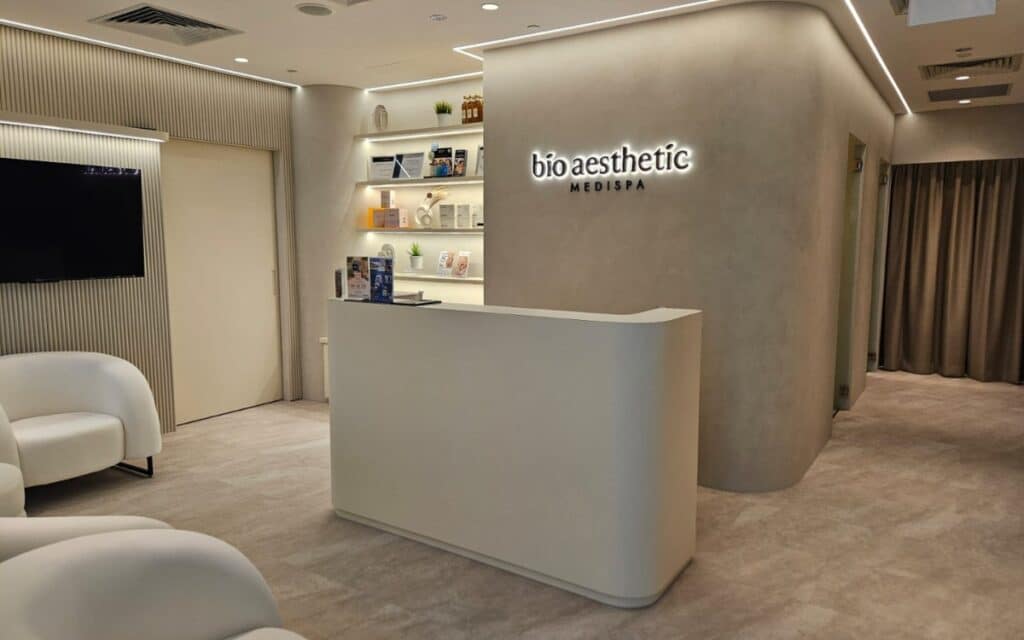
Income @ Tampines Junction, 300 Tampines Avenue 5 #04-05, Singapore 529653
Consult our Doctors for Subcision

Dr Daniel Khaw

Dr Justin Goh

Dr Vijay Sampath
Make an Appointment
Call Us Today! +65 6333 4566 • hello@bioaesthetic.com.sg
This site is protected by reCAPTCHA and the Google Privacy Policy and Terms of Service apply.
Disclaimer: The information on this page is provided for general educational and informational purposes only and should not be relied on as medical, diagnostic, or treatment advice. Content may not be exhaustive, may not apply to every individual, and should not replace a consultation with a qualified doctor. While reasonable care is taken in preparing this content, Bio Aesthetic Laser Clinic and its related parties do not accept liability for any loss, damage, or consequences arising from reliance on the information presented on this page. Suitability for any treatment should always be assessed during a proper medical consultation.