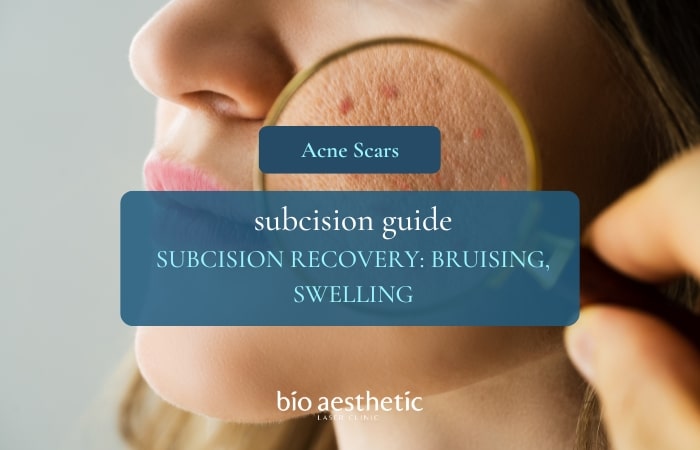
Subcision can dramatically smooth rolling acne scars, but many first-time patients worry about bruising, swelling, and how long it takes to look normal again.
This detailed subcision downtime guide explains what’s expected, what’s not, and how to speed up healing safely.
At a Glance
- 💡 Bruising and swelling are normal and peak within the first 2–3 days.
- 💧 Most people look event-ready by day 7–10.
- 🏃♀️ Avoid exercise and heat exposure for one week.
- 🧊 Ice and rest help reduce puffiness and tenderness.
- 🌞 Sun protection helps reduce the risk of post-inflammatory pigmentation (PIH).
Why Bruising & Swelling Happen After Subcision
Subcision works by releasing fibrous bands tethering acne scars beneath the skin using a fine needle or cannula.
This mechanical release causes tiny blood vessels to break, which leads to temporary bruising and swelling.
The healing process that follows actually triggers collagen formation, which is what makes subcision so effective for smoothing rolling scars.
In short, bruising is not a complication; it’s part of the normal healing response.
Subcision Recovery Timeline
Here’s a realistic day-by-day breakdown of what to expect during subcision downtime.
| Day | What You’ll Notice | Recommended Care |
|---|---|---|
| Day 1–2 | Redness, swelling, and small bruises. Mild soreness or tightness. | Apply a cold compress 10–15 minutes several times daily; keep your head elevated when sleeping. |
| Day 3–5 | Bruises may darken to a purple-blue shade; mild stiffness can happen when smiling or washing your face. | Switch to warm compresses; avoid exercise and saunas; continue gentle cleansing. |
| Day 6–10 | Swelling usually settles, and bruises often fade to a yellowish-green tone. Skin may start looking smoother. | Makeup may be used if the skin is intact; continue SPF 50+ daily; avoid harsh exfoliants. |
| Week 2+ | Most bruising is gone, although mild firmness may persist. Collagen remodelling begins. | Resume your normal routine and light workouts; maintain hydration and daily sunscreen. |
| 1–3 Months | Texture gradually improves as collagen forms under the released scars. | Follow up for the next session if you are on a multi-treatment plan. |
Post-Subcision Care Tips
- Avoid exercise, alcohol, and hot environments for at least 5–7 days.
- Sleep with your head slightly elevated to help reduce swelling.
- Use gentle cleansers only; avoid scrubs or acids until the skin has fully settled.
- Do not massage the treated area unless specifically instructed by your doctor.
- Apply broad-spectrum sunscreen SPF 50+ daily to help reduce the risk of pigmentation.
These measures help shorten recovery and minimise the chance of post-inflammatory hyperpigmentation.
Learn more about your options for acne scar treatment in Singapore.
Frequently Asked Questions
1. How long does subcision bruising last?
Bruising typically peaks by day 2–3 and fades within 7–10 days. Makeup can usually conceal any marks after the fifth day.
2. When can I exercise after subcision?
Avoid heavy workouts, running, and saunas for about a week. Gentle walking is usually fine after 24 hours.
3. Can I combine subcision with fillers or lasers?
Yes, but timing matters. Filler is sometimes added immediately after subcision to help reduce re-tethering, while lasers such as CO₂ are typically spaced a few weeks apart.
4. What skincare should I use after subcision?
Stick to mild cleansers, fragrance-free moisturisers, and sunblock. Avoid retinoids, exfoliants, and vitamin C for about a week unless your doctor advises otherwise.
5. Is it normal to feel lumps or firmness after subcision?
Yes. Small lumps or firmness can happen as the tissue heals beneath the skin. These usually soften within 1–2 weeks as swelling settles.
6. When will I look ‘normal’ again?
Most people feel socially comfortable around day 7–10. By the second week, bruising and swelling are usually minimal, and makeup can cover any remaining marks.
Recovery Is Temporary, Results Are Long-Term
Subcision downtime is usually under two weeks, but the collagen it triggers can continue improving the skin for months.
If you’re planning treatment soon, review Subcision for acne scars or explore a personalised plan through our acne scar treatment guide.
Information is educational and not a substitute for medical advice. Recovery varies depending on scar depth, skin type, and combination treatments.