
Melasma Treatment Singapore
Melasma should not be treated like an isolated brown spot. Because it can flare with UV, visible light, heat, hormonal changes and skin irritation, the first decision is whether the pigment is stable enough for a procedure or needs trigger control and topical stabilisation first.
Treatment may combine photoprotection, pigment-regulating skincare and selected in-clinic procedures. Aggressive or frequently repeated laser treatment can produce temporary lightening but may also cause rebound darkening in reactive skin.
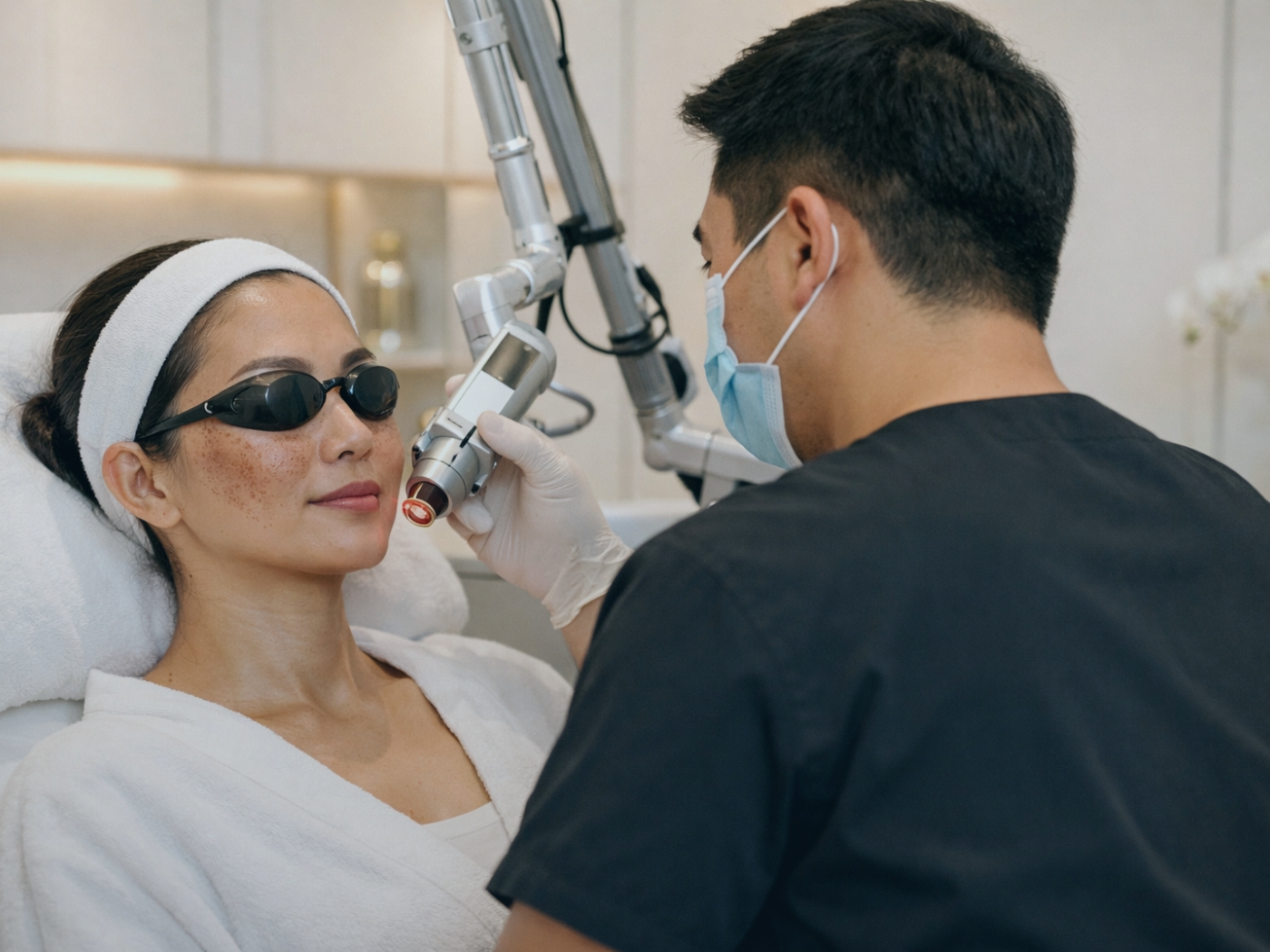
Medically reviewed by Dr Vijay Sampath, M.B.B.S, M.S (Gen Surg), DNB (Gen Surg), MRCS (Edinburgh), Royal College of Surgeons – Edinburgh (MRCSEd) • Medical review: 25 August 2026 • Last updated: August 2026
Why Melasma Should Be Stabilised Before Aggressive Treatment
The first decision is whether the pigmentation is actually melasma and whether it is active. A few defined freckles or sunspots may be treated focally, while diffuse symmetrical pigment that darkens with sun, heat or hormonal changes needs a more conservative strategy. Treating both patterns with the same settings can lighten individual spots while making the background melasma more uneven.
For active or reactive melasma, I would usually prioritise consistent photoprotection, reduce skincare irritation and establish a tolerable pigment-regulating regimen before adding a procedure. If a laser is introduced, it should be used as a cautious adjunct with the response reviewed between sessions. Pigment that becomes darker or patchier is a reason to pause and reassess, not automatically increase the energy.
— Dr Vijay Sampath
Key Points at a Glance
If you are comparing melasma treatment options in Singapore, these are some of the key points patients usually want to know first.
What makes melasma different?
Melasma is chronic, trigger-sensitive, and more likely to recur than freckles or sunspots.
Is there one best treatment?
No. Treatment depends on melasma type, trigger history, skin sensitivity, and maintenance needs.
Are lasers always the answer?
Not always. Lasers may help in selected cases, but melasma often needs topical care, trigger control, and long-term review as well.
Can melasma come back?
Yes. Melasma often recurs with UV exposure, heat, hormones, irritation, or inconsistent maintenance.
How long does treatment usually take?
Melasma usually improves gradually over multiple sessions or phases rather than after one treatment.
Do creams still matter?
Yes. Topical pigment-regulating care and daily sunscreen are often part of long-term melasma management.
Understanding the Concern
Melasma is a chronic pigmentary condition that appears as larger brown or grey-brown patches rather than isolated spots. It most commonly affects the cheeks, forehead, upper lip, nose bridge, and sometimes the jawline.
Unlike freckles or sunspots, melasma is strongly influenced by triggers such as UV exposure, heat, hormones, genetics, and skin irritation. This is why it tends to improve and then return, rather than behave like a one-time pigment spot.
The goal of treatment is usually not to “erase” melasma in one aggressive step. It is to improve visible pigment safely, reduce trigger activity, and maintain a more stable skin baseline over time.

Patterns and Variations
Melasma is a form of pigmentation, but it is not the same as freckles, sunspots, or post-inflammatory hyperpigmentation. It usually appears as broader, patchy areas of pigment and often behaves in a more recurrent and trigger-sensitive way.
Many patients notice that it darkens after sun, heat, travel, hormonal shifts, or the wrong skincare routine. That pattern is one reason melasma needs a more careful and long-term treatment strategy than many other pigment concerns.
Causes and Contributing Factors
1. UV Exposure
Sun exposure is one of the strongest melasma triggers and can worsen visible patches over time.
2. Heat
Heat can aggravate melasma even when direct sun exposure is not obvious.
3. Hormones
Hormonal shifts, pregnancy, and some hormonal medications may contribute to melasma.
4. Genetics
Inherited tendency affects how easily some people develop recurrent pigment patches.
5. Skin Irritation
Harsh skincare, friction, or inflammation may worsen melasma-prone skin.
6. Pigment Cell Sensitivity
In melasma, pigment cells often react too easily to relatively small triggers.

Different Patterns That May Be Seen
Melasma does not always sit at the same depth. Understanding the pattern helps guide how cautious treatment needs to be and what kind of improvement may be realistic.

Epidermal Melasma
More pigment sits in the upper skin layer and often appears light to dark brown.
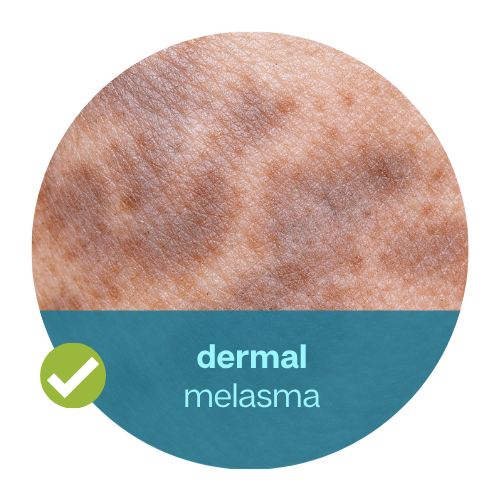
Dermal Melasma
More pigment sits deeper in the skin and may look greyer or bluish.
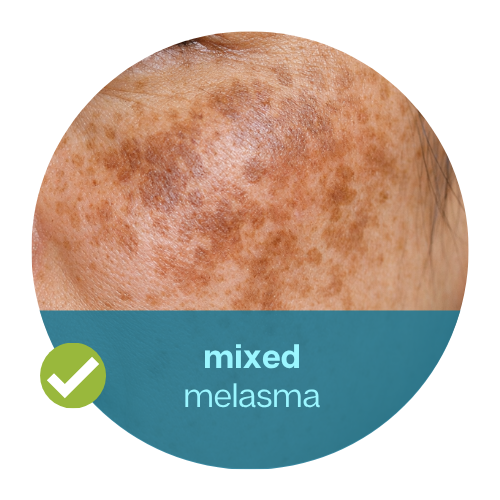
Mixed Melasma
The most common type, with both superficial and deeper pigment components.

Heat Sensitive Melasma
A pattern that tends to flare with warmth, outdoor heat, or overly aggressive procedures.
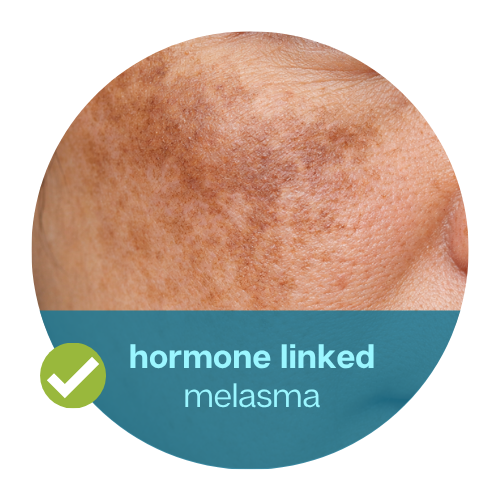
Hormone Linked Melasma
Melasma influenced by pregnancy, contraception, hormonal changes, or endocrine triggers.
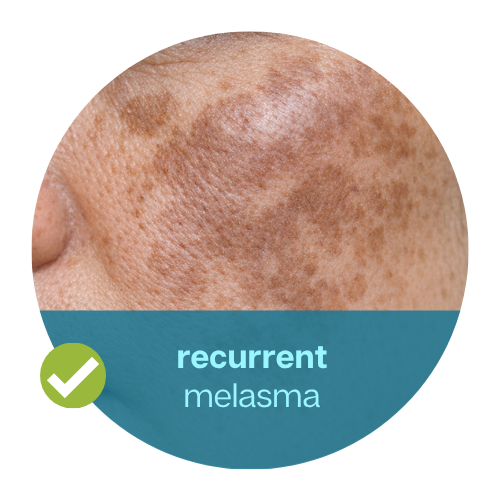
Recurrent Melasma
Melasma that improves for a period, then returns with trigger exposure or routine changes.
How Treatment Direction May Differ
There is no single best treatment for every melasma case. The most suitable option depends on pigment depth, trigger history, skin sensitivity, and how reactive the skin has been to previous treatments.
| Melasma Type | What May Be Considered | Best Suited For | Notes |
|---|---|---|---|
| Epidermal Melasma | Topical pigment care, gentle Q-switched planning, selected peels | More superficial brown melasma patterns | Often responds better than deeper types when the barrier remains calm |
| Dermal Melasma | Long-term maintenance planning, careful Pico or Q-switched selection, trigger control | Deeper, more persistent pigment | Usually needs patience and realistic expectations |
| Mixed Melasma | Combination planning with skincare, selected Q-switched or Pico support, and sun protection | The most common real-world presentation | Often treated in phases rather than with one strong treatment |
| Heat-Sensitive Melasma | Trigger control, conservative settings, lower-heat approaches | Patients whose pigment flares easily with warmth | Aggressive heat can worsen this pattern |
| Hormone-Linked Melasma | Doctor-led assessment, trigger review, topical care, and maintenance-focused planning | Patients with pregnancy- or hormone-related flares | Underlying triggers may still influence recurrence |
Treatment Options That May Be Considered
These are some of the treatment paths commonly discussed for melasma. The most suitable plan depends on pigment depth, skin sensitivity, trigger pattern, and whether the goal is active reduction, maintenance, or both.

Topical Pigment Regulating Care
Topical pigment-regulating care is considered when melasma needs gradual brightening, barrier support, and long-term maintenance.

Chemical Peel
Chemical Peel is considered when superficial melasma, dullness, or uneven tone may benefit from a more cautious exfoliation-based approach.

Q Switched Laser
Q-Switched Laser is considered when melasma care requires gentle, conservative laser planning for heat-sensitive or mixed pigment patterns.

Pico Laser
Pico Laser is considered when melasma planning calls for selected pigment-focused laser support, but it is not automatically the best option for every melasma case.

Tranexamic Acid-Based Care
Tranexamic acid-based care is considered when melasma is persistent, recurrent, or more strongly driven by internal trigger patterns.

Combination Treatment Planning
Combination treatment planning is considered when melasma is influenced by overlapping triggers such as UV, heat, hormones, irritation, and mixed pigment depth.
Treatment Costs in Singapore
If you are comparing melasma treatment prices in Singapore, the final cost depends on the treatment category, the type of melasma, the number of sessions, and whether the plan focuses on topical care, laser support, or combination treatment over time.
| Treatment Option | Published Price | Notes |
|---|---|---|
| Doctor Consultation | Consultation fee applies | Needed for diagnosis and treatment planning |
| Q-Switched Laser | From S$398 | Based on Doctor’s assessment |
| Pico Laser | From S$398 | Based on Doctor’s assessment |
| Chemical Peel | From S$368 | Depending on strength of chemical peel used |
| Topical Regimen | Depends on product and duration | Pricing varies by formulation and maintenance period |
| Tranexamic Acid-Based Care | Doctor-assessed | Suitability and pricing depend on the treatment form considered |
Note: Final treatment cost depends on diagnosis, melasma type, trigger pattern, and whether the plan is more topical, procedural, or combination-based over time. Prices are subjected to GST.
Recovery and Downtime
Downtime varies depending on the treatment method used and how reactive the skin is. For melasma, lower-downtime and lower-irritation approaches are often preferred over more aggressive options.
| Treatment | Typical Downtime Profile | Common Planning Notes |
|---|---|---|
| Topical Pigment-Regulating Care | Usually none, though irritation varies | Barrier tolerance matters |
| Chemical Peel | Mild redness, dryness, or flaking may occur | Not every peel type suits melasma-prone skin |
| Q-Switched Laser | Usually minimal to mild | Often planned conservatively in melasma care |
| Pico Laser | Minimal to a few days, depending on settings | Not automatically the first choice for all melasma cases |
| Combination Plans | Depends on the treatments combined | Often spaced carefully to reduce flare risk |
Why Combination Treatment Is Often Needed
Melasma is rarely driven by one factor alone. UV exposure, heat, hormones, irritation, and pigment depth often overlap in the same patient.
That is why combination planning is often needed. In selected cases, sunscreen, topical care, trigger control, and carefully chosen treatment categories may work better together than relying on one treatment alone.

Not Sure Whether Your Pigmentation Is Melasma?
A consultation can help clarify the diagnosis and the most suitable treatment direction.
What Results Can You Realistically Expect?
Melasma results are usually gradual rather than dramatic after one treatment. Some patients notice a lighter, more even-looking baseline over time, while others need longer-term control rather than a large short-term change.
In general, patients may notice:
- lighter visible patches
- better tone balance
- fewer obvious flare-ups in some cases
- more stable skin when triggers are well managed
Because melasma is chronic and recurrence-prone, results are usually measured by improvement and stability, not by promising a permanent cure.

Why Active Condition Control Matters
Active melasma control still matters even after visible improvement. UV exposure, heat, hormonal shifts, skincare irritation, and inconsistent sunscreen use can all make melasma flare again.
This is why long-term melasma care often includes maintenance habits and regular review, not only in-clinic treatment. For many patients, the goal is to keep the skin as stable as possible between flares.
Prevention and Long-Term Control
Melasma cannot always be fully prevented, especially when genetics or hormones are involved, but some steps can reduce worsening or recurrence over time.
- daily broad-spectrum sunscreen
- avoiding unnecessary heat exposure where possible
- using gentle, non-irritating skincare
- seeking early review when pigmentation starts to spread or darken
- staying consistent with long-term maintenance after treatment
Prevention is usually about reducing triggers and keeping the skin more stable, rather than expecting melasma to disappear permanently.

Risks and Side Effects
Side effects vary by treatment type. Common short-term considerations may include:
- temporary redness or warmth
- dryness, flaking, or sensitivity with some topicals and peels
- temporary darkening in reactive skin
- risk of rebound or worsening if melasma is overtreated
- need for strict UV and heat avoidance after selected procedures
Because melasma is trigger-sensitive, overtreatment can be a problem. This is why cautious planning is often more important than using the strongest possible treatment.

Questions Patients Often Ask
These are some of the most common questions patients ask about Melasma Treatment Singapore, including treatment options, downtime, results, pricing, and doctor-led treatment planning.
Yes. Melasma can affect the upper-lip area and may appear like a darker patch or “sun moustache,” especially after sun exposure or hormonal flares. This is a common presentation mentioned on clinic pages and is one reason melasma is sometimes mistaken for general pigmentation.
Yes. Pregnancy is one of the best-known hormonal triggers of melasma, which is why the condition is sometimes associated with pregnancy-related facial pigmentation. Some clinic pages also note that hormonal contraception can play a similar role.
Melasma treatment can be suitable for Asian skin, but treatment choice and intensity matter because some skin types are more prone to rebound pigment or post-inflammatory darkening if the approach is too aggressive.
It may be considered in selected doctor-assessed cases. Clinic pages frequently mention tranexamic acid as part of a broader melasma strategy rather than a standalone answer for every patient.
Yes. Topical care remains one of the most consistent themes across clinic pages, especially for long-term control, maintenance, and reducing recurrence. This includes prescription and doctor-guided topical pigment care where appropriate.
Both may be considered in selected cases, but neither is automatically the best choice for every patient. Strong clinic pages emphasise that the more suitable option depends on melasma depth, skin type, recurrence risk, and how reactive the skin is to treatment.
No. Strong clinic pages consistently explain that melasma often needs more than laser alone and may involve topical lightening care, oral support, chemical peels, and long-term maintenance depending on the case.
Melasma usually improves gradually rather than instantly. Many clinic pages describe visible improvement over several weeks or multiple sessions, especially when treatment is paired with home care and trigger control.
Session length depends on the method used and the treatment area. Clinic-based melasma treatments are commonly performed as outpatient sessions, and smaller focused treatments are usually shorter than full-face or combined plans.
Comfort levels vary by treatment. Many melasma treatments are generally described as tolerable, but patients may still notice tingling, warmth, mild stinging, or short-term sensitivity depending on whether the treatment is laser-based, peel-based, or topical.
Yes. Recurrence is one of the most common real-life issues with melasma, especially when UV exposure, heat, hormones, or skin irritation continue to act as triggers.
Most strong clinic pages describe melasma as a condition that is managed and controlled rather than permanently cured. Many patients can still improve visibly, but recurrence remains possible even after successful treatment.
It is worth seeking a doctor when pigmentation keeps returning, spreads, darkens, becomes patchy, or does not improve with routine skincare. A medical review is also useful when it is unclear whether the concern is really melasma or another type of pigmentation.
Aftercare usually focuses on strict sun protection, minimising heat exposure, using gentle skincare, and following the post-treatment plan closely. This is especially important because melasma can worsen or recur if the skin is irritated or exposed too early to UV and heat.
Melasma treatment is often approached as a series rather than a single session. The number of sessions depends on pigment depth, trigger activity, skin sensitivity, and whether the plan is mainly topical, peel-based, laser-based, or combined.
A doctor usually assesses melasma by looking at the pattern, colour, depth, distribution, trigger history, and how easily the pigmentation flares. The assessment also helps distinguish melasma from freckles, sunspots, and post-inflammatory pigmentation, because they do not respond the same way to treatment.
Consult Melasma Treatment Singapore Doctors
Melasma treatment planning is clearer when the pigment type and trigger pattern are assessed properly first. The concern may be linked to UV exposure, heat, hormones, skin irritation, or a combination of factors.
At Bio Aesthetic Laser Clinic, doctor-led consultation helps guide the most suitable treatment direction based on skin type, melasma depth, goals, and downtime preferences.

Dr Daniel Khaw

Dr Justin Goh

Dr Vijay Sampath
Our Clinic Locations
Bio Aesthetic Laser Clinic has convenient locations in Orchard and Tampines for patients seeking doctor-led consultation and personalised melasma treatment planning.
Orchard Clinic
Palais Renaissance, 390 Orchard Road #03-01, Singapore 238871
View Orchard map
Tampines Clinic
Income @ Tampines Junction, 300 Tampines Avenue 5 #04-05, Singapore 529653
View Tampines map
Speak With Our Clinic Team
If you are not sure whether your pigmentation is melasma, a consultation can help clarify the diagnosis and the most suitable treatment direction. At <strong>Bio Aesthetic Laser Clinic</strong>, melasma planning is doctor-led and tailored to your skin type, trigger pattern, goals, and downtime preferences.
This site is protected by reCAPTCHA and the Google Privacy Policy and Terms of Service apply.
Explore Related Treatment Options
Sources and Medical References
The references below include clinic-education sources together with selected peer-reviewed references relevant to melasma, pigment depth, and long-term management.
- Dr Shane. (2025). Melasma in Singapore: Causes & treatment options.
- Northside Dermatology. (2025). Melasma treatment Melbourne.
- Passeron, T., & Picardo, M. (2018). Melasma, a photoaging disorder. Pigment Cell & Melanoma Research, 31(4), 461–465.
- Wu, M. X., Yeo, M. M. L., Tey, H. L., & Goh, B. K. (2021). Melasma: A condition of Asian skin. Dermatology and Therapy, 11(3), 827–844.
Disclaimer: This page is provided for general educational purposes only and should not be relied on as medical advice. Suitability for melasma treatment singapore should always be assessed during a consultation with a qualified doctor.