Pigmentation Treatment Singapore

Pigmentation Removal

Pigmentation can appear as freckles, sunspots, melasma, post-acne marks or deeper patches. Although they may look similar, they do not always respond to the same treatment.

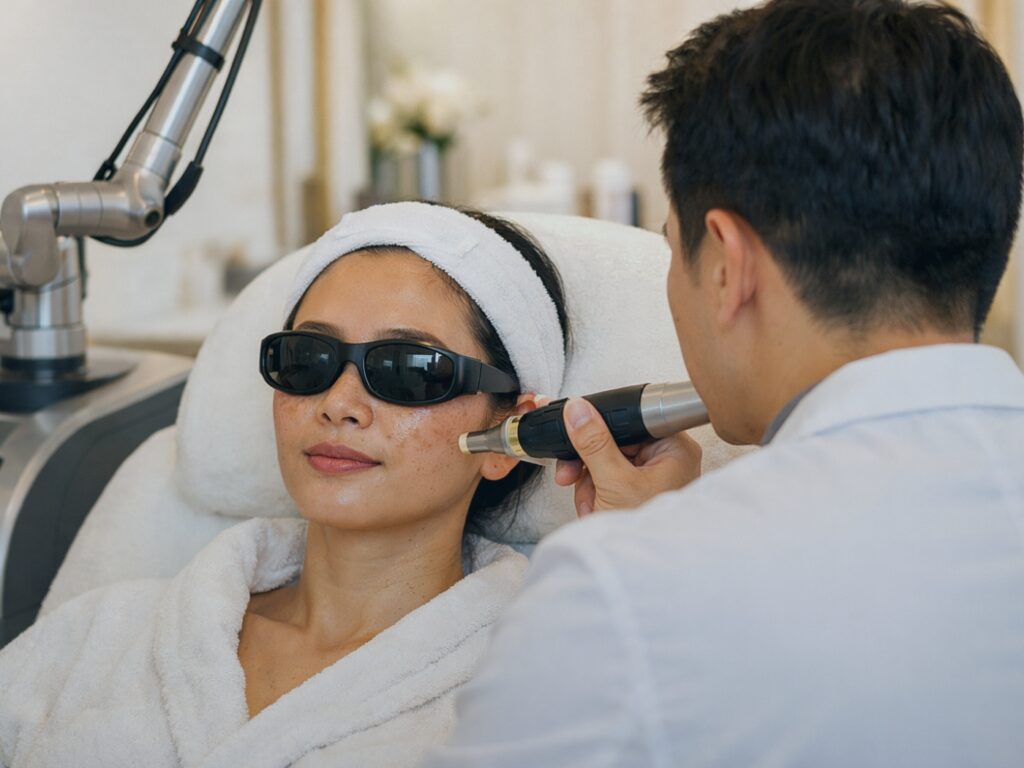
At Bio Aesthetic Laser Clinic, a doctor assesses the pigment pattern, likely depth, triggers and skin type before recommending laser, chemical peel, topical care or a combination plan.

Pigmentation Removal

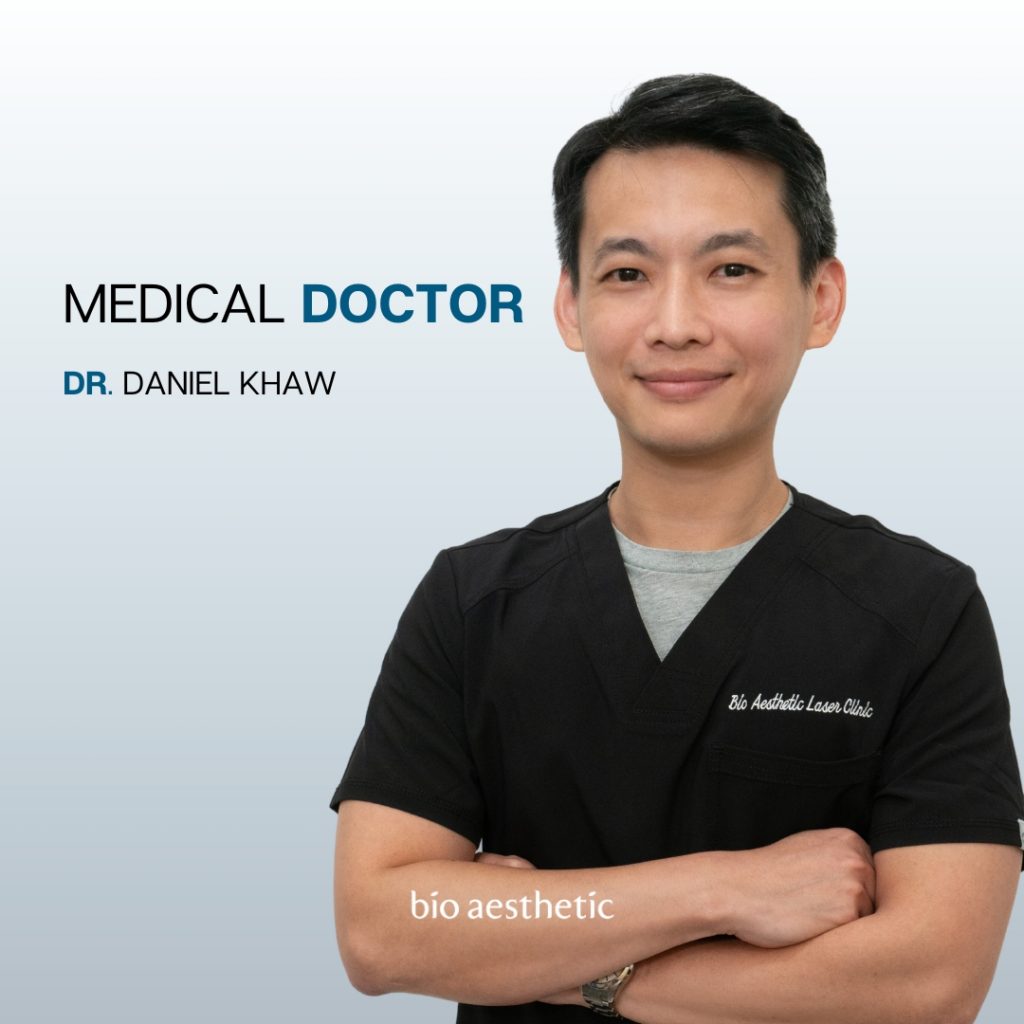
Medically reviewed by Dr Daniel Khaw, M.B.B.S (Australia), MRC PSYCH (U.K.), Bachelor of Biomedical Science, Certificate in Aesthetic Medicine (American Academy of Aesthetic Medicine) Medical review: 4 August 2026 Last updated: August 2026

Clinical Perspective

Treating Pigmentation in Asian Skin

Pigmentation treatment should be matched to the type and likely depth of pigment rather than treating every brown mark in the same way. During assessment, I look for differences between melasma, post-inflammatory hyperpigmentation, freckles and deeper pigmentation because they may respond differently to treatment. Some pigmentation can also worsen when treatment is too aggressive, so a gradual plan, consistent sun protection and monitoring the skin’s response are important considerations.

— Dr Daniel Khaw

Quick Answers

Pigmentation Treatment in Singapore: Key Answers

The first question should not be “Which laser is strongest?” It should be “What type of pigmentation do I have?” The answer affects your treatment, expected recovery, number of sessions and risk of recurrence.

Pattern Before Device

A defined sunspot can often be targeted directly. Diffuse, symmetrical or grey-brown pigmentation usually requires a more cautious treatment plan.

Control Inflammation First

Active acne, eczema or irritation should usually be settled before pigment treatment; otherwise the procedure itself may produce further darkening.

Melasma Needs Restraint

Stronger laser treatment is not automatically better. Excessive heat or repeated aggressive treatment can destabilise melasma and cause rebound pigmentation.

What Is It?

What Is Skin Pigmentation?

Skin pigmentation is mainly produced by melanin. A pigmentation concern develops when melanin becomes concentrated in particular spots or patches, or when inflammation causes excess pigment production.

“Pigmentation removal” is the term commonly used by patients, but permanent removal is not always realistic. Treatment may fade visible marks, create a more even appearance and help control recurring pigment.

The likely result depends on the type of pigmentation, how deeply it sits and whether triggers such as sun exposure, hormones, acne or irritation remain active.

What Is Skin Pigmentation?

Freckles, Sunspots, Melasma or Post-Acne Marks?

Pigmentation can appear in several forms:

• Freckles are small, flat spots that often become darker after sun exposure.

• Sunspots are more defined brown marks caused by accumulated ultraviolet exposure.

• Melasma usually appears as symmetrical brown or grey-brown patches across areas such as the cheeks, forehead or upper lip.

• Post-inflammatory hyperpigmentation consists of brown or grey marks left after acne, eczema, irritation or injury.

• Deeper dermal pigmentation may look grey, blue-grey or deep brown and can require a longer treatment plan.

• Mixed pigmentation means that more than one type is present in the same area.

Because these patterns respond differently, identifying the likely pigment type should come before choosing a treatment.

Causes

What Causes Skin Pigmentation?

1. UV and Visible Light

UV exposure can darken freckles, sunspots, melasma and post-inflammatory marks. Visible light may also aggravate melasma in some skin types.

2. Heat

Heat may worsen reactive or melasma-prone skin, especially when combined with sun exposure or skin irritation.

3. Hormonal Changes

Pregnancy, hormonal medication and individual hormonal sensitivity can contribute to melasma and recurring patchy pigmentation.

4. Acne and Inflammation

Acne, eczema, picking, injury and skin procedures can trigger post-inflammatory hyperpigmentation after the skin heals.

5. Genetics and Skin Type

Genetics affect how easily pigmentation develops. Asian and darker skin types may also produce more pigment after inflammation.

6. Skincare Irritation

Harsh scrubs, excessive active ingredients and unsuitable products can damage the skin barrier and make pigmentation more noticeable.

What Causes Skin Pigmentation?
Types

Types of Pigmentation: Which Pattern Changes the Treatment Plan?

The useful distinction is not simply whether a mark is brown. The treatment decision depends on whether the pigment is discrete or diffuse, superficial or deeper, and whether inflammation or melasma remains active.

A laser approach that is appropriate for an isolated sunspot may aggravate melasma or recent post-inflammatory pigmentation. Identifying the pattern therefore comes before choosing the device.

Freckles and Sunspots

Freckles and Sunspots

When spots are well-defined, stable and clinically benign, targeted pigment laser is usually more appropriate than treating the entire face. Freckles may return with continued UV exposure, while an irregular or changing spot should be assessed before any laser treatment.

Melasma

Melasma

Diffuse or symmetrical patches need more restraint than isolated spots. Trigger control and pigment stabilisation usually come first, with laser used selectively as an adjunct. Excessive heat or aggressive repeated treatment can cause rebound darkening.

Post-Inflammatory Hyperpigmentation

Post-Inflammatory Hyperpigmentation

When pigmentation follows acne, eczema, irritation or a procedure, the inflammation should be controlled first. Treating too early can create further skin injury and make the marks darker or slower to clear.

Deeper or Mixed Pigmentation

Deeper or Mixed Pigmentation

Grey-brown or blue-grey pigment may sit deeper than an ordinary sunspot, while mixed pigmentation contains more than one pattern. These cases usually need a staged approach; trying to clear everything aggressively in one session increases the risk of post-inflammatory darkening.

Best by Type

Which Pigmentation Treatment Fits Each Pattern?

The strongest treatment is not necessarily the most suitable one. The correct direction depends on whether the pigment is isolated or widespread, whether it sits superficially or deeper in the skin, and how easily the skin develops post-inflammatory darkening.

The table below shows the usual treatment direction, but suspicious, raised or changing lesions should be medically assessed rather than treated as routine pigmentation.

Pattern Usually preferred Choose differently when
Freckles
Small, separate spots that darken with sun
Focal Q-Switch laser to treat individual superficial spots. Wait after recent tanning. For darker or reactive skin, use lower energy or consider StarWalker MaQX.
Sunspots
Larger, persistent and well-defined patches
Focal Q-Switch laser when only a few spots are present. For numerous spots with roughness or uneven tone, consider 1927 nm Thulium BB Laser. Assess raised or changing lesions first.
Melasma
Diffuse, usually symmetrical facial patches
Pigment-stabilising skincare and photoprotection first, followed by cautious 1064 nm Q-Switch toning if stable. Avoid aggressive focal, Pico or heat-based treatment when melasma is active because it may rebound or become patchier.
Post-acne pigmentation
Flat brown marks left after breakouts
Control active acne first. For stable superficial marks with congestion, consider a chemical peel. For deeper or persistent marks, cautious 1064 nm Q-Switch toning may be preferred.
Widespread superficial pigment
Uneven tone with dullness or rough texture
1927 nm Thulium BB Laser for broader superficial treatment and texture renewal. For only one or two defined spots, focal Q-Switch treatment is more direct.
Deeper or mixed pigment
Grey-brown, blue-grey or mixed patterns
StarWalker MaQX Pico/Q-Switched hybrid for greater flexibility across different pigment depths. Stabilise active melasma or recent inflammation before treating the remaining pigment.
Treatment Options

Pigmentation Treatment Options in Singapore

The best treatment is the one matched to the diagnosis, not automatically the newest laser or strongest setting. The options below may be used alone or as part of a staged treatment plan.

Q Switch Laser

Q Switch Laser

Q Switch laser is considered for freckles, sunspots, selected pigmentation concerns, and gradual brightening plans.

Freckles, sunspots, selected uneven tone concerns Minimal Downtime
Pico Laser

Pico Laser

Pico laser is considered for pigmentation, freckles, melasma-related care, acne marks, and mixed tone concerns.

Superficial and deeper pigment concerns Minimal Downtime
Chemical Peel

Chemical Peel

Chemical peel is considered for superficial pigmentation, dullness, texture, and selected post-inflammatory marks.

Surface pigment and tone refresh plans Minimal Downtime
BB Laser (Thulium)

BB Laser (Thulium)

BB laser is considered for laser toning, pigmentation-focused brightening, and selected tone-refinement plans.

Pigmentation and brightening goals Mild to Minimal Downtime
Topical Pigment Correcting Cream

Topical Pigment Correcting Cream

Creams such as Hydroquinone used in combination with doctor's plan to support pigment control, maintenance, and recurrence reduction.

Maintenance and combination treatment support No Downtime
Combination Treatment

Combination Treatment

Often discussed when pigment triggers overlap, such as sun, melasma tendency, acne marks, and recurrent uneven tone.

Mixed or stubborn pigmentation Depend on treatments
Pricing

How Much Does Pigmentation Treatment Cost in Singapore?

BA Clinic’s published starting prices are shown below. Your total cost depends on the pigment type, treatment area, treatment mode and number of sessions required.

Treatment Option Published Price Notes
Q Switch Laser – Basic Skin Toning From S$198 Single session price
Q Switch Laser – Targeted Pigmentation From S$398 Single session price for targeted pigmentation / tattoo / pore reduction
Pico Laser – Pigmentation From S$398 Price per treatment area
Chemical Peel From S$368 Acne Peel Facial pricing
BB Laser (Thulium) – Remove Pigmentation From S$560 Single session price
Topical Pigment Care Price confirmed after assessment Depends on formulation and duration of use

Note: Prices stated are subject to GST where applicable. Final pricing still depends on suitability, pigment type, treatment area, and whether the plan involves a series or a broader combination approach.

Downtime

Pigmentation Treatment Downtime and Recovery

Many patients can continue their usual activities after treatment, but temporary redness, sensitivity, spot darkening, crusting or flaking may still be visible.

Treatment Typical Downtime Profile Common Planning Notes
Q Switch Laser Usually minimal to mild Often planned at intervals and as a series
Pico Laser Minimal to a few days Depends on intensity and treatment goal
Chemical Peel Mild peeling or flaking may occur Depends on peel type and strength
BB Laser (Thulium) Usually limited Downtime depends on treatment mode
Topical Pigment Care Usually none, though irritation varies Formulation tolerance matters
Combination Planning

Why Pigmentation May Need Combination Treatment

More than one type of pigmentation may be present at the same time. For example, defined sunspots may sit over an area of melasma, or active acne may continue producing new post-acne marks.

A combination plan may involve:

• controlling acne, eczema or irritation;

• establishing daily light protection;

• using topical treatment to reduce pigment production;

• treating suitable spots with a pigment-targeting laser; and

• adjusting treatment according to recovery and response.

Combination treatment does not mean doing everything together. It means using the appropriate treatments in the correct sequence.

Why Pigmentation May Need Combination Treatment

Not Sure What Type of Pigmentation You Have?

A doctor assessment can help distinguish freckles, sunspots, melasma, post-acne marks and mixed pigmentation before you choose a treatment.

Results and Timeline

What Results Can Pigmentation Treatment Achieve?

Results depend on the type of pigmentation being treated, how deep the pigment sits, and whether the trigger is ongoing. Surface spots may fade more predictably, while melasma and recurrent pigment often need a more careful, longer-term strategy.

In general, patients may notice:

  • a clearer-looking complexion
  • lighter visible spots or patches
  • more even tone
  • better skin brightness overall

Some concerns improve gradually over multiple sessions rather than after one treatment. Daily sun protection and trigger control still matter after visible improvement.

What Results Can Pigmentation Treatment Achieve?

Why Can Pigmentation Return After Treatment?

Treatment can reduce existing pigment, but it does not remove every future trigger.

Pigmentation may return because of ultraviolet exposure, visible light, heat, hormonal influence, new acne, eczema, picking or skincare irritation.

This does not always mean that treatment failed. Freckles, sunspots, melasma and post-acne marks have different recurrence patterns, so maintenance should be matched to the diagnosis.

Prevention

How to Prevent Pigmentation From Returning

Not every recurrence can be prevented, but these measures can reduce avoidable triggers:

• use broad-spectrum sunscreen daily and reapply when needed;

• use shade, hats and physical protection during prolonged exposure;

• treat acne, eczema and irritation early;

• avoid picking, aggressive scrubbing and excessive active ingredients;

• follow the aftercare given for your treatment;

• return for review if pigmentation becomes unexpectedly darker; and

• continue maintenance care at a frequency suited to your skin.

Patients with melasma may also be advised to use visible-light protection, such as an appropriate tinted sunscreen.

How to Prevent Pigmentation From Returning
Side Effects and Risks

Pigmentation Treatment Risks and Side Effects

Common temporary effects include redness, warmth, swelling, dryness, flaking, sensitivity and darkening or light crusting of treated spots.

Less common risks include post-inflammatory hyperpigmentation, loss of pigment, prolonged redness, burns, blistering, infection, scarring or worsening of reactive pigmentation.

Risk depends on the diagnosis, treatment settings, skin type, current inflammation, recent sun exposure and aftercare. Pigment-prone skin can still be treated, but the treatment should be matched carefully and adjusted according to response.

Contact the clinic promptly if you develop blistering, significant pain, spreading redness, discharge, marked swelling or unexpected pigment changes.

Pigmentation Treatment Risks and Side Effects
Common Questions

Frequently Asked Questions About Pigmentation Treatment

These are some of the most common questions patients ask about Pigmentation Removal, including treatment options, downtime, results, pricing, and doctor-led treatment planning.

Treating the wrong type of pigmentation may produce little improvement, cause unnecessary irritation or make reactive pigmentation darker. Melasma, freckles, sunspots and post-inflammatory pigmentation do not always respond to the same treatment, which is why the pigment pattern and likely depth should be assessed before choosing a laser, peel or topical treatment.

Many pigmentation treatments have limited downtime, so some patients return to daily activities fairly quickly. That said, recovery still depends on the treatment used, and some patients may have temporary redness, dryness, or mild peeling that is more noticeable for a few days.

Pigmentation treatment can be suitable for Asian skin, but the treatment type, settings and intensity must be chosen carefully. Asian skin can be more prone to post-inflammatory hyperpigmentation or rebound darkening after excessive heat or irritation, so treatment should be adjusted according to the diagnosis, skin response and recovery.

They can often be treated as part of the same plan, but active acne should also be controlled to prevent new marks from forming. The doctor will assess whether the marks are brown post-inflammatory pigmentation, red post-acne marks, acne scars or a mixture, because each may require a different treatment approach.

Yes. Melasma is generally treated more cautiously because it is affected by factors such as light, heat and hormones and is prone to recurrence. Management may involve light protection, topical pigment care and carefully selected procedures rather than aggressive treatment intended to remove pigment quickly.

Laser treatment is often used when the goal is to target melanin more precisely, especially for freckles, sunspots, or deeper pigment. Chemical peels are more often used for superficial pigment, tone irregularity, and selected acne marks. The better option depends on the pigment type and how reactive the skin is.

No. Defined freckles, sunspots and certain deeper pigments may suit laser treatment, but other concerns may respond better to topical care, chemical peels, trigger control or a combination plan. Melasma and post-inflammatory pigmentation may require a more cautious approach because excessive irritation can worsen the discolouration.

Results vary according to the pigmentation type, depth and treatment used. Some defined superficial spots may begin to fade after treatment, while melasma, post-inflammatory pigmentation and deeper pigment usually improve more gradually over a series of sessions. Treated spots may also temporarily darken before fading.

Session duration depends on the treatment method, treatment area and whether more than one procedure is performed. A small targeted area generally takes less time than full-face treatment or a combination plan. The estimated duration can be confirmed after the recommended treatment has been selected.

Comfort levels vary according to the treatment and intensity used. Laser treatment may feel warm or like brief snapping sensations, while a chemical peel may cause tingling or temporary stinging. Any discomfort is usually short-lived, but sensitivity can continue during the early recovery period.

Yes, it can. Recurrence is one of the biggest practical issues in pigmentation care, especially for melasma and pigment that is repeatedly triggered by sun, heat, inflammation, or unsuitable skincare. That is why maintenance and trigger control are often discussed alongside treatment.

Some defined freckles or sunspots may clear well after treatment, but new spots can still develop with further sun exposure. Melasma and post-inflammatory pigmentation are more likely to recur and are generally managed rather than considered permanently cured. Long-term results depend on the diagnosis, trigger control, maintenance and daily light protection.

It is worth seeking a doctor when the pigment is spreading, keeps returning, looks patchy or uneven, is affecting confidence, or has not improved with routine skincare. A medical review is also useful when it is unclear whether the concern is melasma, acne marks, sun damage, or something deeper.

Aftercare usually focuses on strict sun protection, avoiding unnecessary heat exposure, using gentle skincare, and following the post-treatment instructions given for your specific laser or peel. This matters because pigment can worsen or recur more easily if the skin is irritated or exposed too soon to UV and heat.

The number of sessions depends on the pigmentation type, depth, treatment method and individual response. Defined superficial spots may improve in fewer sessions, while melasma, post-inflammatory pigmentation, mixed pigmentation and deeper pigment often require a gradual course. The recommended number should be reviewed according to how the skin responds.

A doctor usually starts by looking at the pattern, colour, depth, trigger history, and location of the pigment. The assessment often focuses on whether the concern behaves more like freckles, sunspots, melasma, post-inflammatory hyperpigmentation, or a deeper dermal pigment issue, because these do not respond the same way to treatment.

Consult Our Doctors

Consult Pigmentation Removal Doctors

Meet the doctors available for pigmentation assessment and treatment planning at our Orchard and Tampines clinics.

Dr Daniel Khaw

Dr Daniel Khaw

Aesthetic Doctor
M.B.B.S (Australia), MRC PSYCH (U.K.), Bachelor of Biomedical Science, Certificate in Aesthetic Medicine (American Academy of Aesthetic Medicine)
Dr Justin Goh

Dr Justin Goh

Aesthetic Doctor
MB, BCh, BAO (National University of Ireland), ADEG Certified Aesthetic Physician (Singapore)
Dr Nicole Chan

Dr Nicole Chan

Aesthetic Doctor
MBBS (S’pore), Graduate Diploma in Practical Dermatology, Graduate Diploma in Clinical Dermatology
Dr Vijay Sampath

Dr Vijay Sampath

Aesthetic Doctor
M.B.B.S, M.S (Gen Surg), DNB (Gen Surg), MRCS (Edinburgh), Royal College of Surgeons – Edinburgh (MRCSEd)
Locations

Pigmentation Treatment at Our Orchard and Tampines Clinics

Pigmentation consultations and suitable treatments are available at Bio Aesthetic Laser Clinic in Orchard and Tampines. Please confirm your preferred doctor, treatment and outlet availability when booking.

Orchard Clinic

Bio Aesthetic Laser Clinic Orchard

390 Orchard Road, #03-01
Palais Renaissance, Singapore 238871

View Orchard map

Tampines Clinic

Bio Aesthetic Laser Clinic Tampines

300 Tampines Avenue 5, #04-05
Income @ Tampines Junction, Singapore 529653

View Tampines map

Book a Pigmentation Assessment

Tell us whether your concern is a defined spot, patchy pigmentation, melasma or post-acne marks, and whether you have previously tried laser, peels or topical treatment.

    CHOOSE OUTLET:

    This site is protected by reCAPTCHA and the Google Privacy Policy and Terms of Service apply.

    Related Treatments

    Explore Related Pigmentation Treatments

    Sources

    Medical References for Pigmentation Treatment

    This page has been medically reviewed and uses peer-reviewed references covering Asian skin, melasma, post-inflammatory pigmentation and laser-related pigment risks.

    • Chan IL, Cohen S, da Cunha MG, Maluf LCP. Characteristics and management of Asian skin. International Journal of Dermatology. 2019;58(2):131–143. View reference
    • Davis EC, Callender VD. Postinflammatory hyperpigmentation: epidemiology, clinical features and treatment options in skin of colour. Journal of Clinical and Aesthetic Dermatology. 2010;3(7):20–31. View reference
    • Wu MX, Yeo MML, Tey HL, Goh BK. Melasma: a condition of Asian skin. Dermatology and Therapy. 2021;11(3):827–844. View reference
    • Taylor SC, et al. Laser treatments for post-inflammatory hyperpigmentation: a systematic review. JAMA Dermatology. View reference

    This page provides general educational information and does not diagnose an individual skin lesion or replace an in-person medical assessment. Treatment suitability, expected sessions, recovery and risks depend on the diagnosis, skin type, medical history and treatment settings. Seek medical assessment for a new, changing, bleeding, raised or otherwise unusual pigmented lesion.