
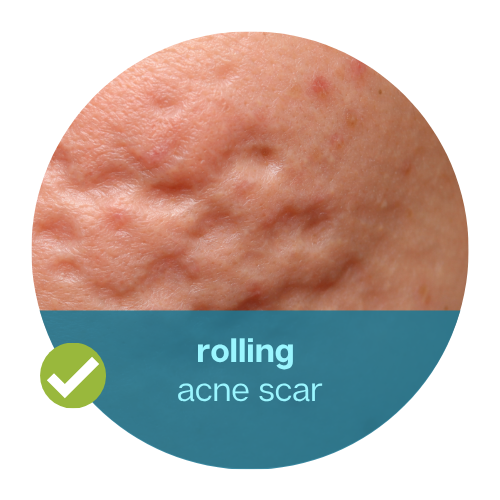
Rolling Scars
Broad, wave-like depressions with sloping edges. Some are tethered by fibrous bands beneath the skin and may flatten partly when the surrounding skin is stretched.
Acne scars are not all the same. Rolling scars may be tethered beneath the skin, boxcar scars have defined edges, and ice-pick scars form narrow, deep tracts.
Treatment should therefore be selected by scar type, depth and skin response, not by choosing one laser for every scar.
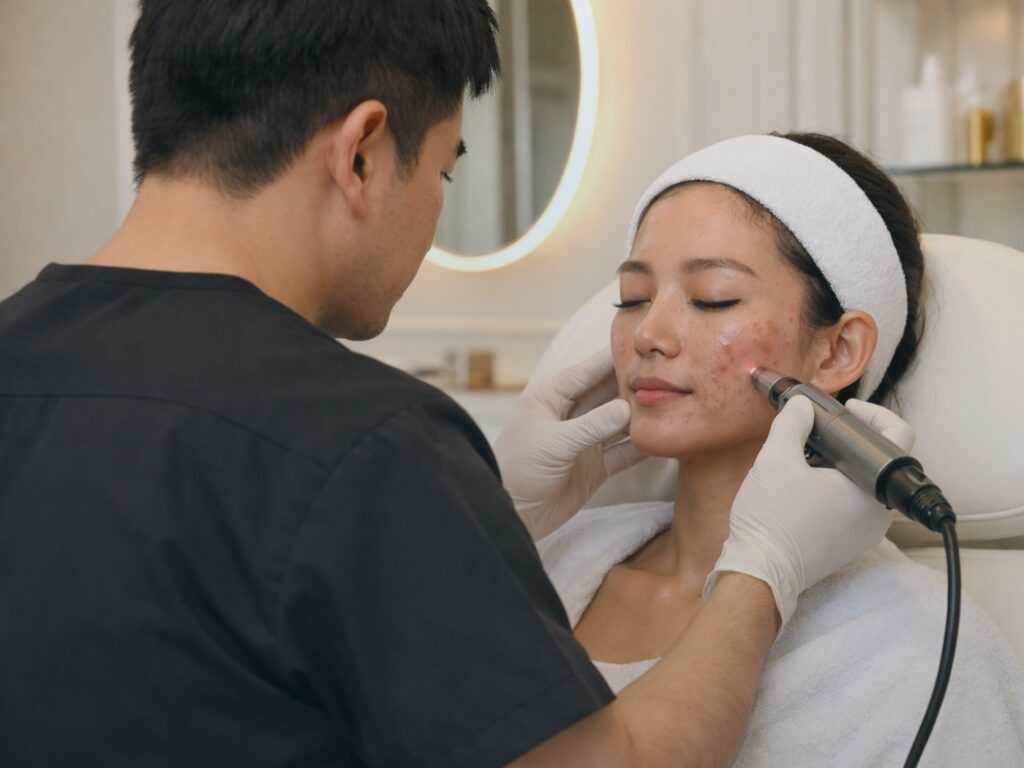
Acne scar treatment should start with identifying the scar structure, not choosing a machine. Rolling, boxcar, ice-pick and mixed scars can behave differently, so depth and tethering help determine the treatment direction.
Acne scars are structural changes at different depths of the skin. A surface-resurfacing treatment may improve texture, but it cannot reliably release a rolling scar that remains tethered underneath. Similarly, broad resurfacing alone may not adequately reach a deep, narrow ice-pick scar.
I first look at the dominant scar type, depth, edge definition and tethering. I also assess active acne, pigmentation risk, previous treatment response and how much downtime the patient can accommodate. The treatment sequence is then planned around the scar feature that is most limiting improvement.
For mixed scars, this may mean releasing tethered areas first, treating deep focal scars separately and performing resurfacing or collagen-remodelling treatment at a later stage.
Clinical perspective reviewed by Dr Vijay Sampath
Acne scars do not all look the same. Identifying the scar type is important because rolling, boxcar, and ice pick scars usually respond to different treatments. Many patients also have mixed acne scars, which is why a tailored plan is often needed.
Post-inflammatory hyperpigmentation or erythema may also appear after acne heals. These dark marks or areas of redness are common after inflammation, but they are not true scars and may improve with time or appropriate treatment.
Broad, wave-like depressions with sloping edges. Some are tethered by fibrous bands beneath the skin and may flatten partly when the surrounding skin is stretched.
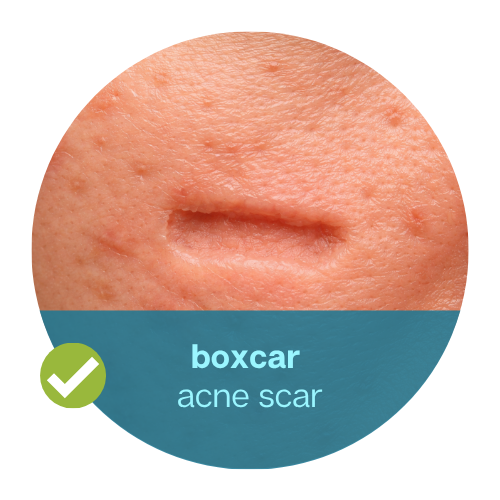
Round or oval depressions with more defined edges. Shallow scars may respond to resurfacing; deeper scars may need a focal procedure or structural support.
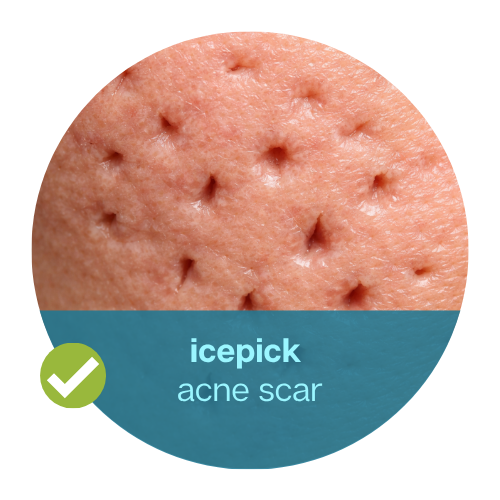
Narrow openings that extend deeply into the skin. Their depth makes surface resurfacing alone less predictable, so focal treatment may be considered.
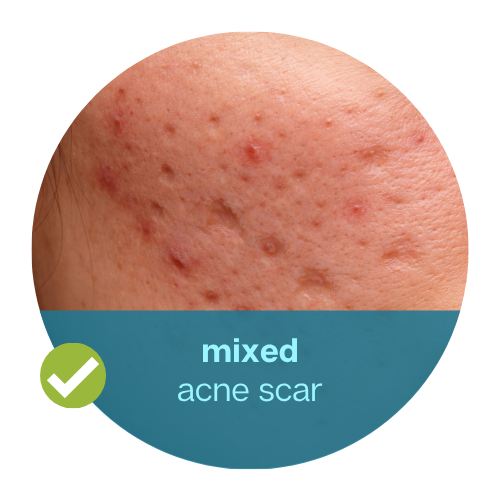
Many patients have a combination of rolling, boxcar, and ice pick scars. Mixed scars often need a combination treatment plan.
Indented or raised changes in the skin surface. Colour can fade while the change in texture remains.
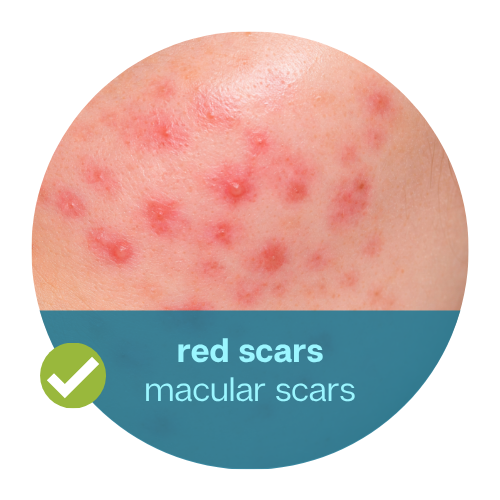
Red, pink, brown or grey-brown marks such as PIE or PIH without the same structural depression.
Why different acne scars may need different treatment approaches.
A doctor assessment considers the concern pattern, current skin condition and factors that may change the treatment plan.
The most suitable acne scar treatment usually depends on the type of scar present. Rolling, boxcar, and ice pick scars often behave differently, which is why treatment selection is commonly based on scar pattern rather than one fixed treatment for every patient.
Each card shows the defining feature and the usual treatment direction at a glance.
Different procedures work at different depths. Selection should follow examination of the scar structure, active acne, skin tone, pigmentation risk, healing history and acceptable downtime.
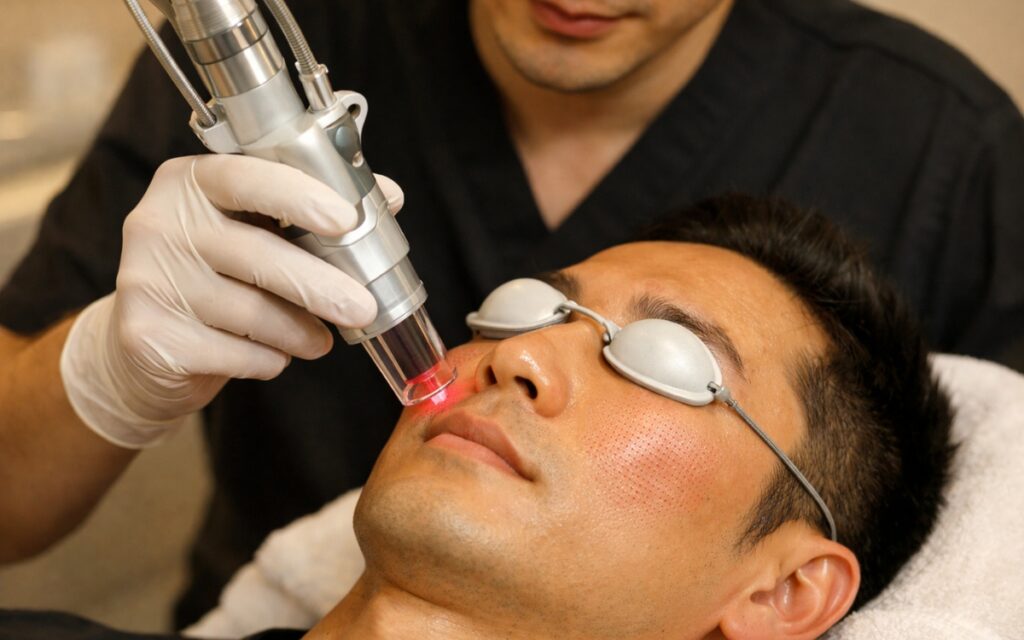
Creates controlled microscopic treatment zones to resurface texture and stimulate collagen remodelling. It does not reliably release every deep tether or narrow tract.
View treatment page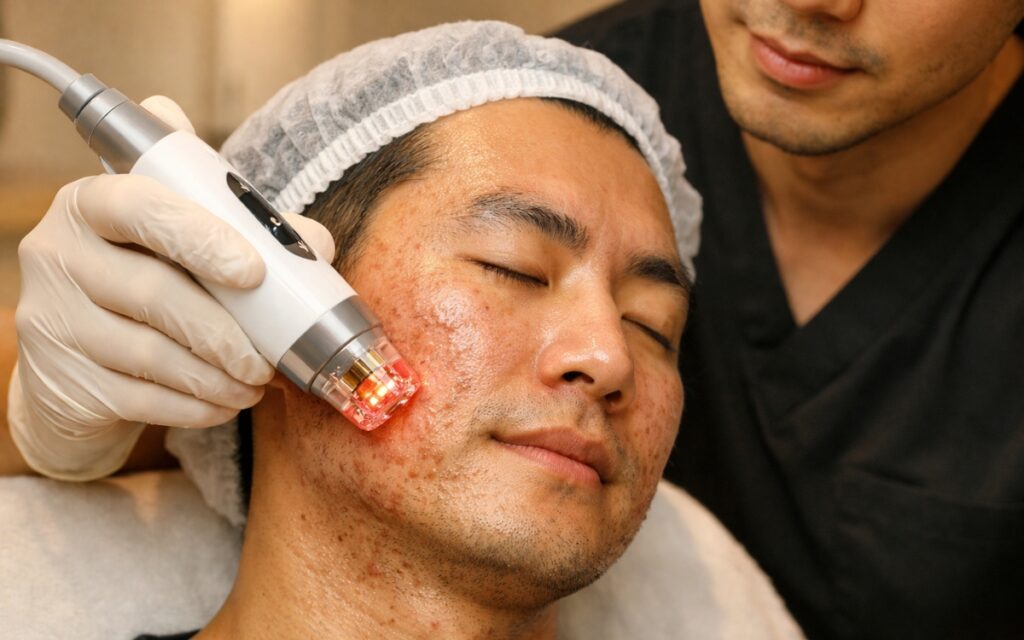
Delivers radiofrequency energy through microneedles at selected depths to support collagen remodelling with less surface ablation than CO₂ laser.
View treatment page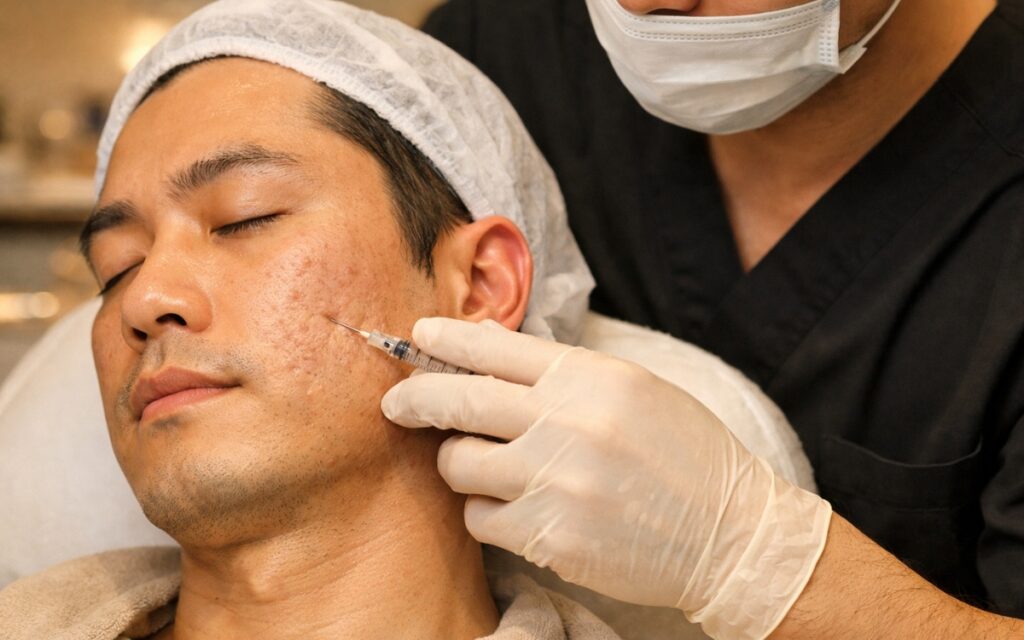
A needle or cannula is used beneath the skin to release fibrous bands that tether selected depressed scars.
View treatment page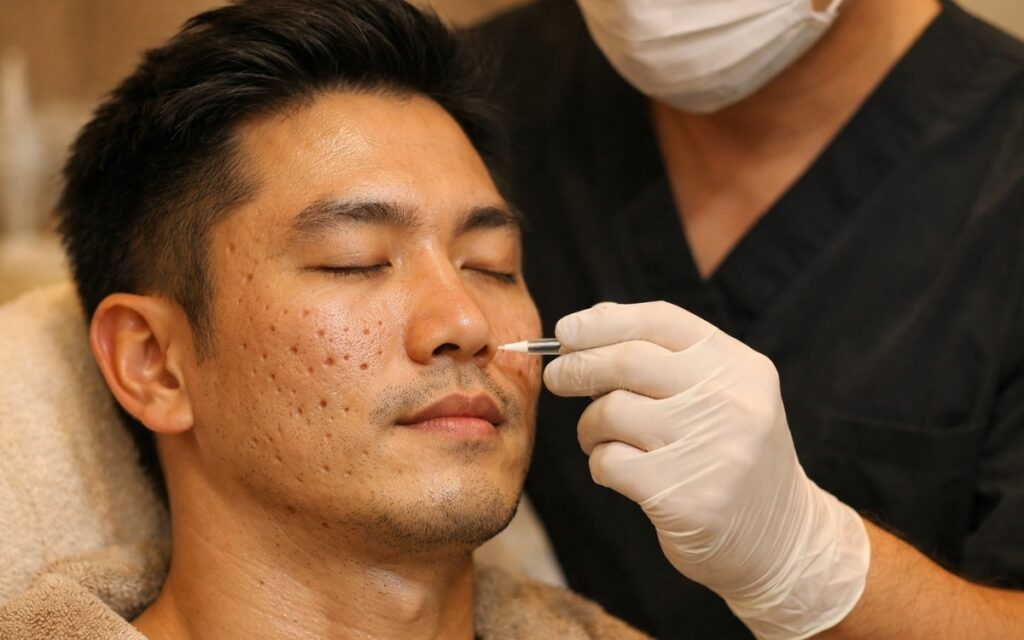
A high-concentration acid is applied precisely inside selected scar openings to create controlled focal remodelling.
View treatment page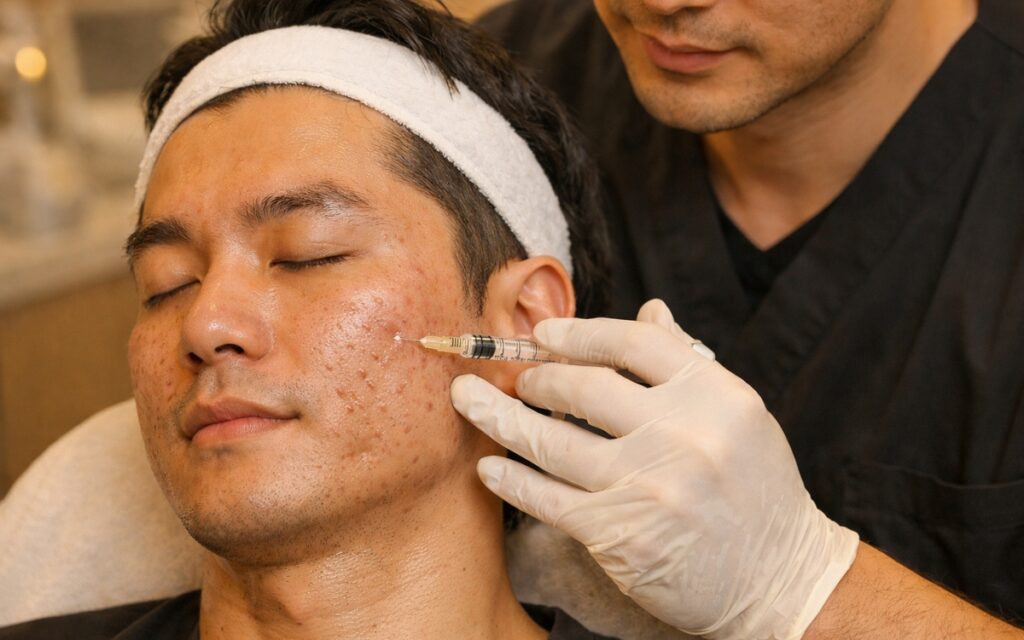
Injectable polynucleotides may be considered as an adjunct to support skin quality and healing; they do not mechanically release tethered scars.
View treatment page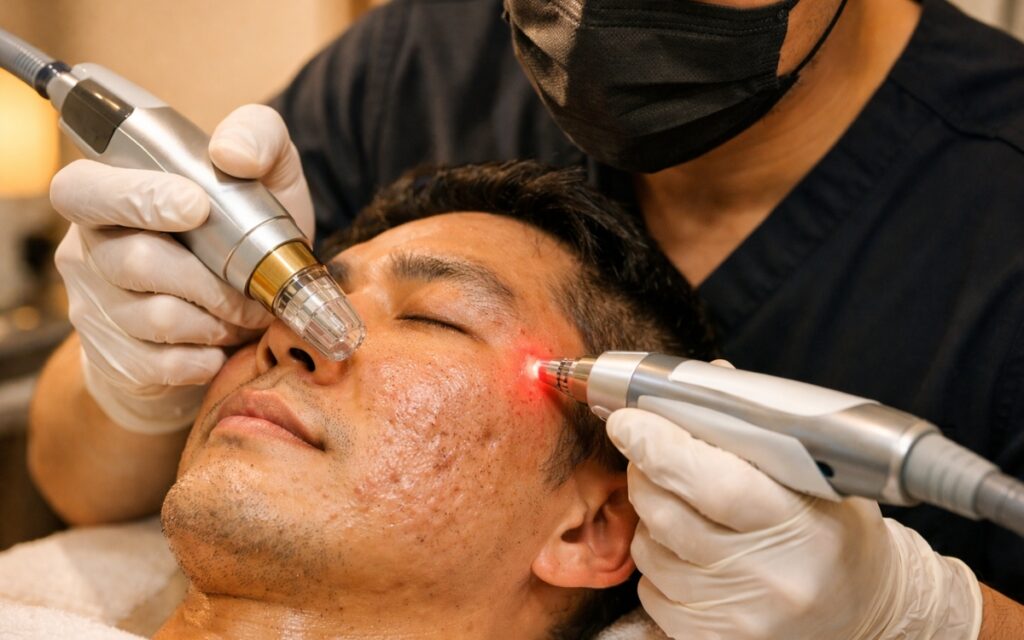
Procedures are sequenced according to scar type, response and healing rather than applying every treatment at once.
View treatment page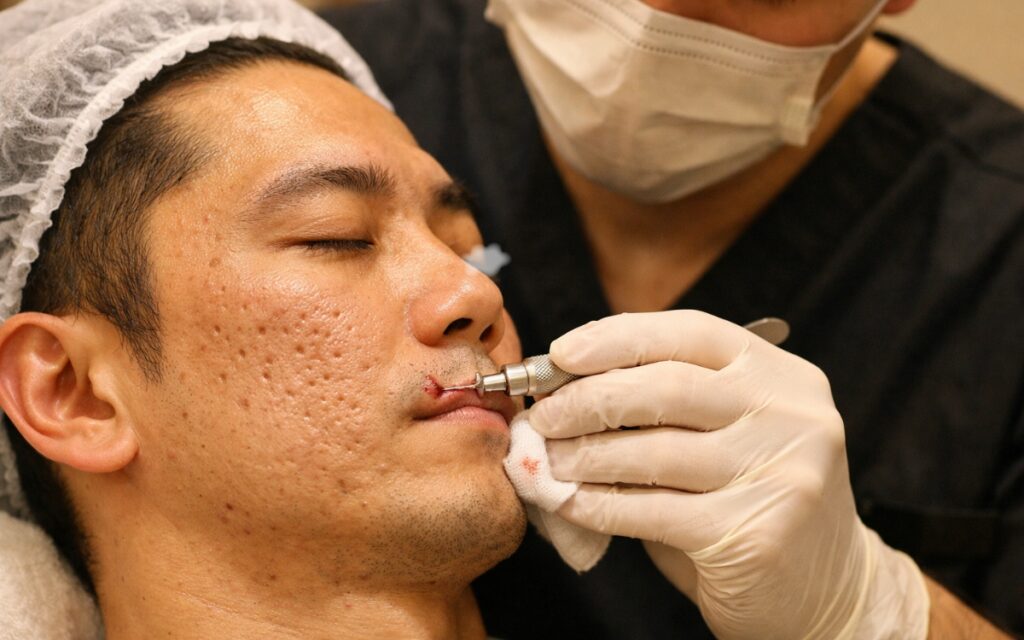
Punch procedures may be considered for selected deep, well-defined scars that require a more targeted surgical approach.
Discuss during consultation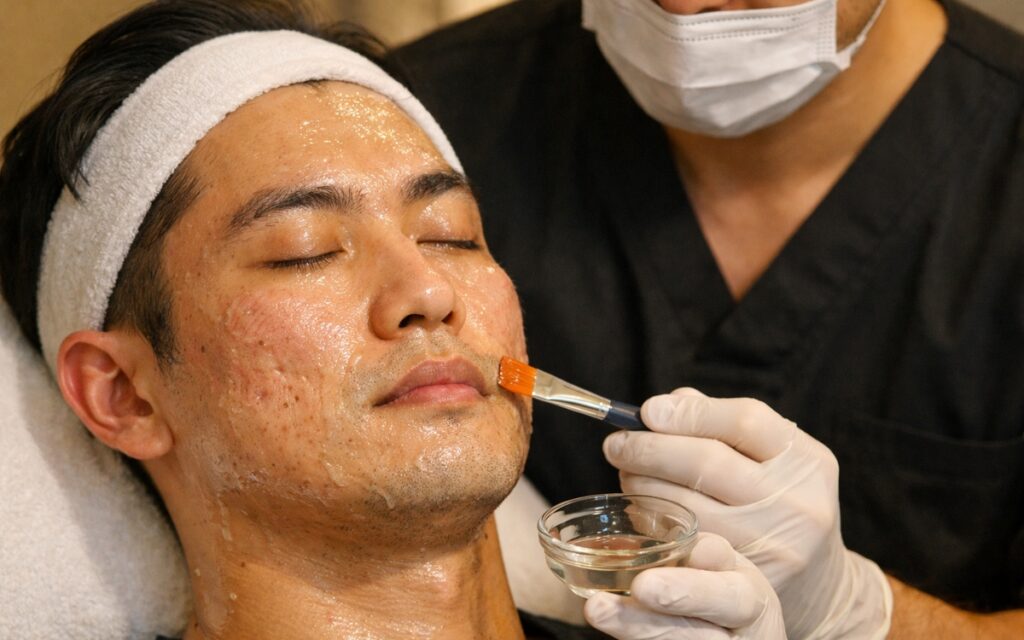
A controlled chemical solution exfoliates selected surface layers. Peel depth and suitability must be assessed carefully.
View treatment page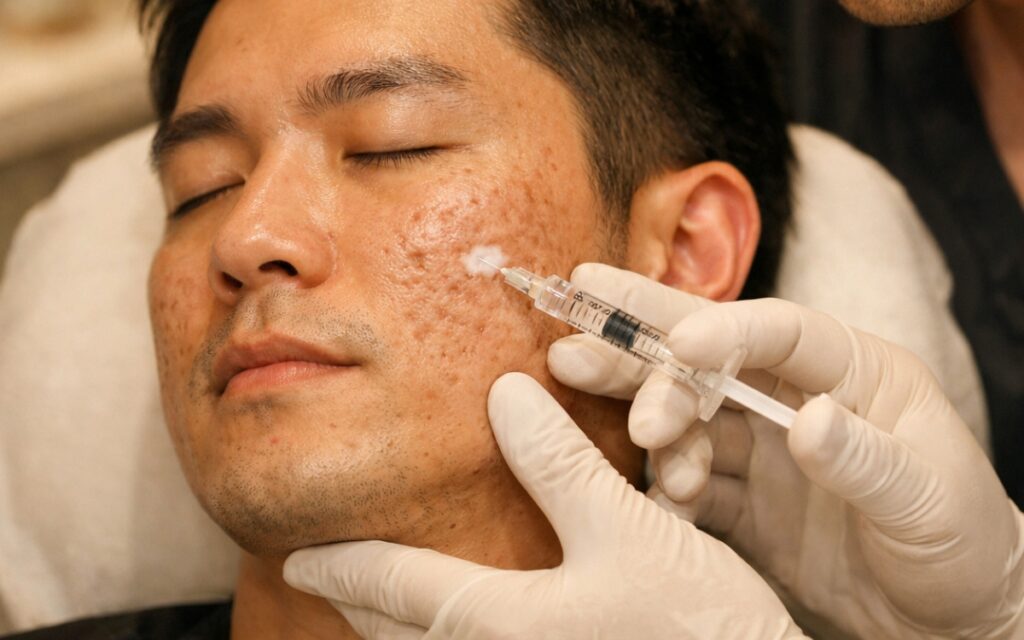
Filler may support selected depressions after tethering has been assessed or released. It is not appropriate for every scar or area.
View treatment pageStarting prices and typical visible downtime are shown together for easier comparison.

Aesthetic Doctor
M.B.B.S, M.S (Gen Surg), DNB (Gen Surg), MRCS (Edinburgh), Royal College of Surgeons – Edinburgh (MRCSEd)
Dr Vijay assesses the scar type, depth and tethering first, then considers the skin condition and previous treatment response before planning the treatment sequence.

Dr Daniel Khaw is an aesthetic doctor in Singapore providing personalised consultations and doctor-led treatment planning for skin and facial concerns.
View doctor profile →
Dr Justin Goh is an aesthetic doctor in Singapore providing personalised consultations and doctor-led treatment planning for skin and facial concerns.
View doctor profile →
Acne scars are not all treated the same way. At Bio Aesthetic Laser Clinic, treatment planning starts by identifying the scar types and the structures causing them, before deciding which procedure or combination of procedures may be suitable.
Key information stays concise, with fuller medical detail available on demand.
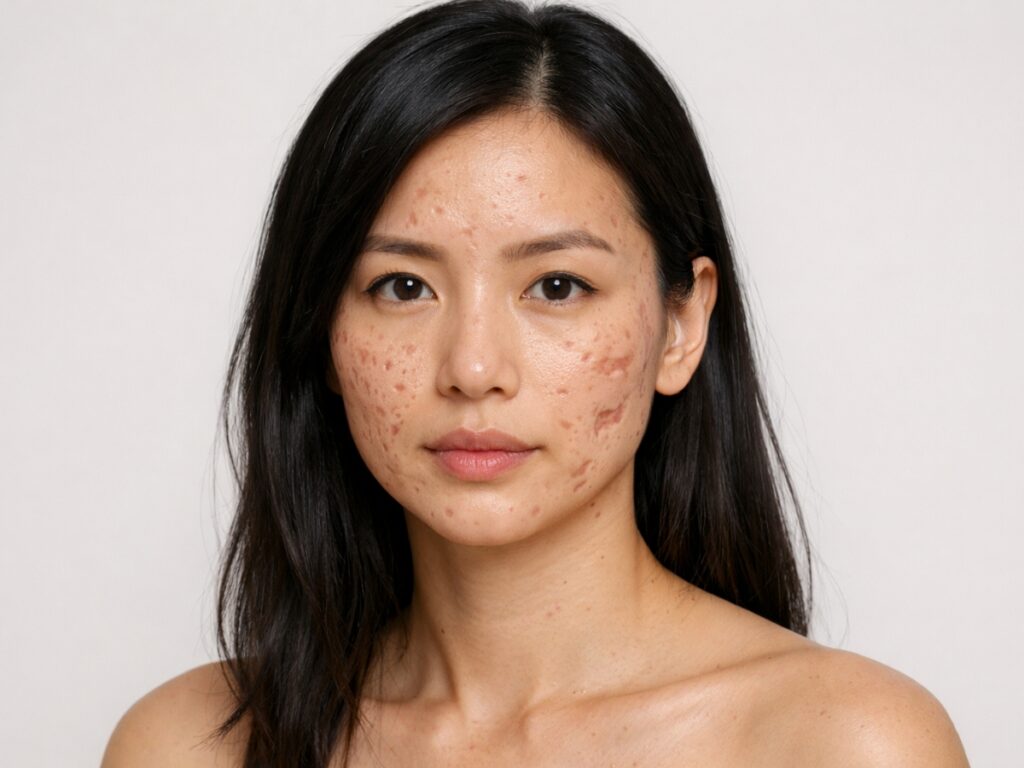
Acne scar improvement is gradual and depends on the scar type, depth and treatment used. Some changes may be noticeable earlier, but broader texture improvement usually becomes clearer after the skin has healed and collagen remodelling has had time to develop.
Early changes may be visible after swelling and surface healing settle, but collagen remodelling develops gradually. Texture may continue changing over several weeks or months.
Release or support of a selected depression may be noticed earlier than broader textural improvement. Mixed scars may not respond uniformly, and several stages may be needed.
Results should be reviewed after adequate healing rather than immediately after each procedure.
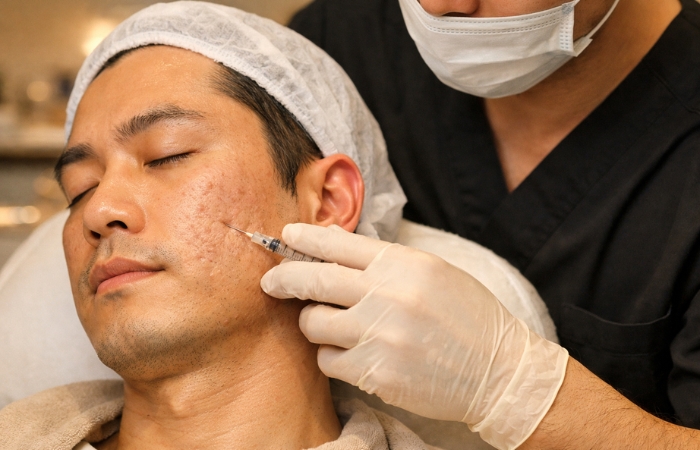
Expected side effects vary by procedure and may include redness, swelling, tenderness, peeling, bruising or temporary pigmentation changes. The risk profile also depends on skin type, treatment intensity, healing history and whether you are prone to post-inflammatory pigmentation or abnormal scarring.
Temporary effects depend on the treatment and may include redness, swelling, tenderness, dryness, peeling, bruising or light crusting. These usually settle as the skin heals.
Less-common risks include infection, prolonged redness, pigmentation changes, delayed healing or additional scarring. The risk of post-inflammatory hyperpigmentation may be higher in darker or pigmentation-prone skin.
Tell the doctor about active acne or infection, recent tanning, keloid tendency, pregnancy, medication and previous skin reactions. Seek medical advice if pain, swelling or redness worsens instead of improving.
Doctor-led consultations are available at both Bio Aesthetic Laser Clinic locations.

Direct answers first, with additional clinical detail available where useful.
Usually, yes. If you are still getting inflamed pimples, cysts or nodules, these can continue creating new scars while the older scars are being treated. Getting the acne under reasonable control first usually makes the scar treatment plan more meaningful.
You do not necessarily need completely clear skin before starting every scar procedure. A few occasional pimples are very different from ongoing inflammatory acne. The doctor will look at how active the acne is, where it is occurring and whether the planned procedure can be performed safely on the current skin.
Yes. An acne scar does not become untreatable simply because it has been there for many years. What usually matters more is the type of scar, how deep it is and whether it is tethered to the tissue underneath.
An old rolling scar may still be held down by fibrous bands, while an old ice-pick scar may still extend deeply into the skin. Those features are more useful for planning treatment than the age of the scar alone. Older scars can also become more noticeable as facial volume and skin support change over time.
Skincare can improve acne, pigmentation and overall skin quality, but it usually cannot fully correct a true indented scar. A cream cannot physically release a tethered rolling scar or reach the full depth of a deep ice-pick scar.
Retinoids can improve skin turnover and may soften the appearance of mild atrophic scarring over time. They are still useful, especially when acne or post-acne marks are also present. The limitation is structural depth. Deeper or tethered scars often need a procedure that works at the level where the scar is actually formed.
Fractional laser can improve surface texture and stimulate collagen, but not every acne scar is mainly a surface problem. Tethered rolling scars and very deep ice-pick scars may remain because they need a different treatment approach.
Rolling scars can be pulled down by fibrous attachments under the skin, so repeatedly resurfacing the top layer may only give limited improvement. Deep ice-pick scars can also extend beyond the depth that conventional resurfacing can adequately address. If laser treatment has plateaued, the remaining scar types should be reassessed before simply increasing the laser intensity.
Not every acne scar procedure requires a six-month wait after isotretinoin. Current evidence is more flexible than the old blanket rule, but the answer still depends on the exact procedure, your skin condition and how recently isotretinoin was taken.
Some fractional laser treatments, superficial peels and other less aggressive procedures may be considered without automatically waiting six months. More aggressive resurfacing procedures still require greater caution. Always tell the doctor your dose, when you started or stopped isotretinoin and whether your skin is still unusually dry or sensitive.
No. Rolling, boxcar and ice-pick scars are depressed scars caused by loss of tissue. Keloid and hypertrophic scars are raised because too much scar tissue has formed. They need a different treatment strategy.
A procedure used to release or resurface an indented scar is not automatically suitable for a raised scar. If you have a personal history of keloids, that is also important because certain procedures that deliberately injure the skin may carry a higher risk of abnormal scarring.
Yes. If only a few scars are bothering you, those scars can sometimes be treated individually instead of treating the entire face. The right option depends on whether the scar is tethered, sharply defined or very narrow and deep.
For example, selected tethered scars may be treated with subcision, while narrow deep scars may be suitable for TCA CROSS. Certain deep boxcar or ice-pick scars may also be considered for punch techniques. Full-face resurfacing is more relevant when there is broader uneven texture across a larger area.
That can change the treatment plan. If your skin develops pigmentation easily, the doctor may need to adjust the treatment type, energy, density and sequencing to reduce the risk of post-inflammatory pigmentation.
This is especially relevant in Asian and darker skin types. Existing melasma, recent tanning or a strong history of pigmentation after procedures may make aggressive resurfacing less appropriate. The scar and the pigmentation should be assessed separately, because improving one problem should not unnecessarily worsen the other.
Because indented scars change the contour of the skin. Side lighting and overhead lighting create stronger shadows along the edges of rolling and boxcar scars, so the scars can suddenly look deeper even though they have not changed.
This is why acne scars can look very different in a bathroom mirror, car mirror or photograph. Directional lighting highlights changes in skin contour. During assessment, doctors may also stretch or feel the skin to understand whether a depression is tethered and how much of its appearance comes from the tissue underneath.
If improvement has plateaued, the next step should usually be to reassess the scars rather than simply repeat the same treatment at a higher intensity. The scars that remain may have a different structure from the ones that improved.
For example, resurfacing may improve general texture and shallower scars while leaving tethered rolling scars largely unchanged. Deep ice-pick scars may also persist because the treatment is not reaching the full depth of the scar. At that point, changing the treatment method may make more sense than repeating the same one again.
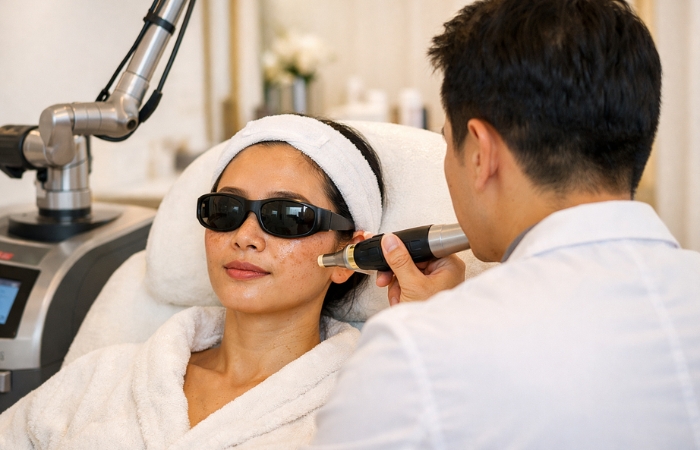
Arrange a doctor-led assessment of your acne activity, scar patterns, treatment options, expected downtime and likely treatment sequence.

Bio Aesthetic Laser Clinic is a doctor-led aesthetic clinic in Singapore with locations in Orchard and Tampines, offering personalised consultation and treatment planning for a range of face and skin concerns.
We are part of the Theresa Holdings group of healthcare brands.