
- Average duration: Around 3–4 months for most facial areas
- Longest-lasting areas: Forehead and frown lines for many patients
- Shorter-lasting areas: Crow’s feet and mouth-related muscles
- First-time treatments: Can wear off a little faster initially
- Maintenance: Regular reviews often make timing more predictable over time
What actually determines how long results last?
Duration is influenced by several factors that stack together rather than a single “fixed” number. The biggest driver is muscle activity: stronger muscles and more frequent movement tend to recover faster, which can shorten how long results appear to last.
Beyond that, individual metabolism, injection technique, and your aftercare habits can influence how stable the outcome feels in the first two weeks and how smoothly movement returns later on.
Because candidacy and dosing are closely tied to muscle patterns, many patients find it helpful to start with a complete overview of treatment approach and expectations in this guide to botulinum toxin injections in Singapore, then use articles like this one to plan timelines and reviews.
How long results last by area (realistic ranges)
The ranges below are intentionally realistic, because the same person can see slightly different longevity at different times of the year depending on stress, sleep, sun exposure, and how much they use certain facial expressions.
The “why it varies” column is there to help you understand what’s normal, rather than making you chase an exact date.
| Treatment area | Typical duration | Why it varies |
|---|---|---|
| Forehead lines | 3–4 months | Large muscle group with relatively predictable movement patterns |
| Frown lines (glabella) | 3–5 months | Often strong muscles; longevity may improve with consistent maintenance |
| Crow’s feet | 2.5–4 months | Frequent smiling and eye movement can bring activity back sooner |
| Bunny lines | 2–3 months | Small muscles that can be activated often without you noticing |
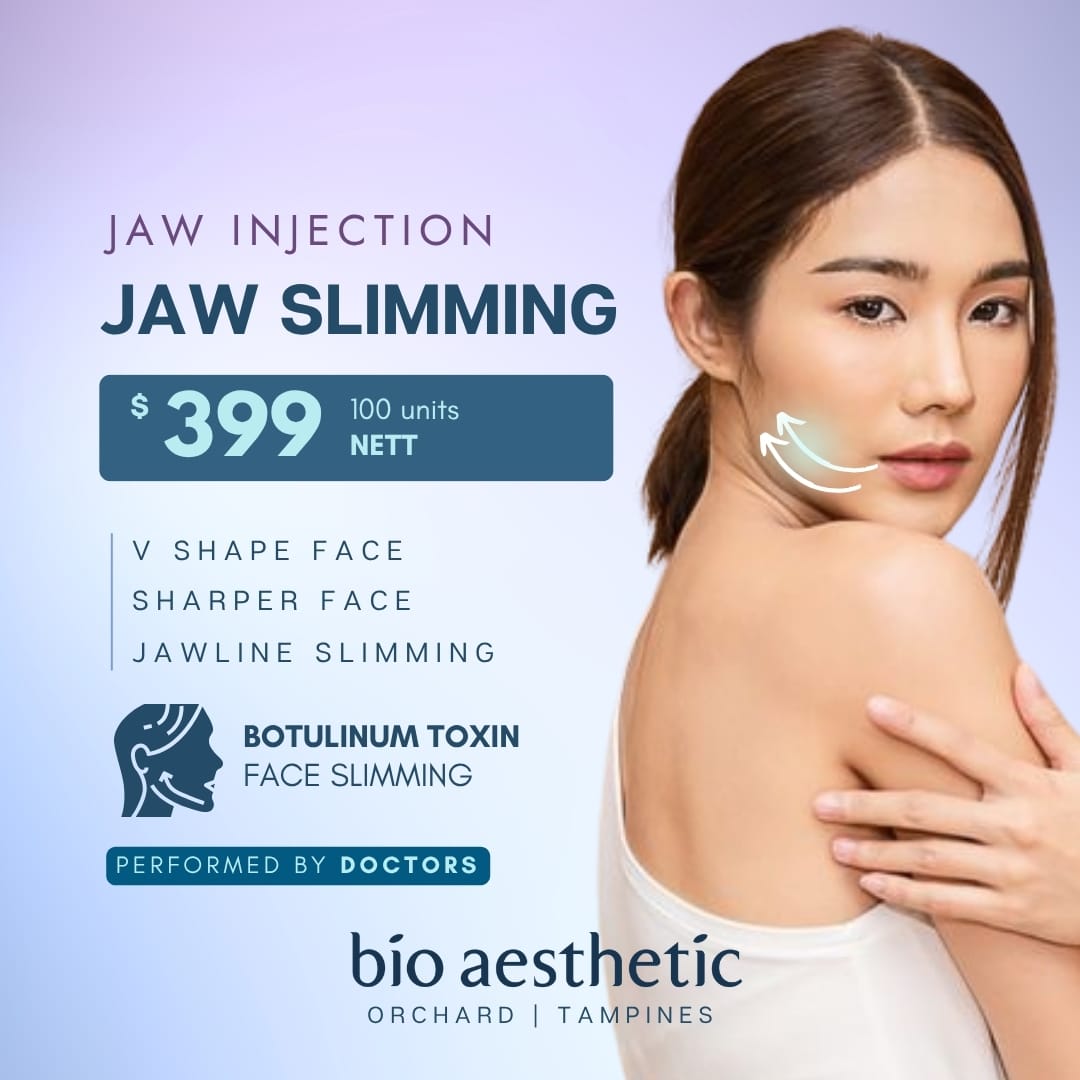
| Jaw (masseter) | 4–6 months | Larger muscle; functional reduction can persist longer for some patients |
| Chin / mouth corners | 2–3 months | Constant daily use during speech, eating, and expression |
First-time vs maintenance: why the timeline can feel different
If it’s your first time, it’s common to feel that results wear off a little faster.
That does not mean the treatment “didn’t take”; it usually means your baseline muscle activity is still strong and you are more aware of movement returning.
With sensible spacing and consistent reviews, many patients find the pattern becomes easier to predict, because the strongest contractions soften and the plan can be adjusted conservatively based on how your face responds.
Does Singapore’s climate change how long it lasts?
Heat and humidity don’t directly shorten duration, but they can indirectly affect what you notice.
Bright sun and outdoor exposure can increase squinting, and stressful weeks can increase habitual frowning or clenching, so movement may feel like it returns sooner even when the underlying timeline is normal.
In other words, climate tends to influence facial habits and comfort more than the treatment itself.
Aftercare habits that can support a stable outcome
Aftercare won’t override muscle biology, but it can help reduce early irritation and keep the first two weeks smoother, which matters because that is when the result is settling.
Practical habits usually include avoiding intense exercise and excessive heat exposure for the advised period, not massaging or applying pressure to treated areas immediately after treatment, and keeping sun protection consistent so the skin surface stays calm.
Mechanistically, botulinum toxin is used to temporarily reduce muscle contraction, which is why dynamic, expression-related lines respond best.
If you’d like a clinician-oriented explanation, dermatology guidelines summarise these principles clearly: Indian Journal of Dermatology – Guidelines on the use of botulinum toxin type A.
When should you review or repeat treatment?
Many patients schedule a review around the 3- to 4-month mark, even if movement hasn’t fully returned, because the goal of a review is not “topping up early.”
Instead, it’s to assess how your muscles are recovering, confirm symmetry and natural movement, and plan maintenance in a way that stays conservative while still meeting your goals.
If you prefer to be more hands-off, some people wait until they notice consistent movement returning in their main area of concern, then book a review to plan the next step.
Side effects & safety considerations
When administered appropriately, side effects are usually mild and temporary.
They can include short-term redness, swelling, or bruising at injection sites.
Importantly, “lasting longer” does not automatically mean “higher risk”; safety is primarily about appropriate dosing, technique, and sensible intervals based on your individual response.
Frequently Asked Questions
1) How soon do results start working?
Most people notice changes within 3–5 days, with full effect developing around 10–14 days.
2) Why do some areas wear off faster than others?
Areas with frequent movement or smaller muscles tend to regain activity sooner, which can shorten the visible duration.
3) Can results last longer than four months?
Yes. Some areas, especially larger muscles such as the jaw (masseter), can last closer to 4–6 months, and maintenance plans can also improve predictability.
4) Does a higher dose mean longer-lasting results?
Not necessarily. Appropriate dosing aims to balance longevity with natural movement, so “more” is not always “better.”
5) Will results last longer after repeated treatments?
Often yes. Over time, strong contraction patterns may soften, which can make the timeline feel more stable from session to session.
6) Can exercise shorten how long results last?
Regular exercise doesn’t usually negate results, although very strong or frequent muscle use may influence duration slightly in some people.
7) Is it bad to repeat treatment too frequently?
Overly frequent treatments are generally avoided. Reviews help determine safe timing based on muscle recovery rather than fixed schedules.
8) Do men and women experience different duration?
Men often have stronger facial muscles, which can mean results wear off a little sooner, although individual patterns vary.
9) What happens when results wear off?
Muscle activity gradually returns to baseline over time. Wrinkles don’t suddenly worsen beyond their original appearance.
10) Should I wait until movement fully returns before reviewing?
Not always. Many people review around the expected duration window to plan maintenance, rather than waiting for a complete reversal.
Last reviewed by Dr. Vijay Sampath, M.B.B.S, M.S (Gen Surg), DNB (Gen Surg), MRCS (Edinburgh) — January 2026