- Makeup doesn’t automatically cause acne—formula choice and removal habits matter more.
- Look for lightweight, non-comedogenic bases that sit comfortably in Singapore’s humidity.
- Layer thinly and avoid heavy occlusive textures over inflamed areas.
- Thorough but gentle makeup removal at night helps prevent clogged pores.
TL;DR: Acne-prone skin can still wear makeup comfortably with the right formulas and habits. Choose breathable, non-comedogenic textures, avoid heavy layering in humidity, and prioritise proper makeup removal to reduce the chance of clogged pores.
Does makeup actually cause acne?
Makeup itself doesn’t directly cause acne. Breakouts are more often linked to underlying factors such as oil production, clogged pores, bacteria, hormones, or irritation.
However, certain makeup formulas can contribute to congestion if they trap sweat and oil—especially in Singapore’s humid climate.
The key factors affecting acne-prone skin are:
- Formula weight and occlusiveness
- How frequently makeup is worn
- Proper cleansing and removal
- Compatibility with existing skincare
What “non-comedogenic” really means
The term non-comedogenic generally indicates that a product is formulated to reduce the likelihood of clogging pores.
It does not guarantee that a product will never trigger breakouts for every individual.
For acne-prone skin in humid climates, non-comedogenic makeup tends to:
- Use lighter oils or silicone bases
- Avoid heavy waxes and occlusive ingredients
- Be designed to sit lightly on the skin
Choosing the right makeup base for acne-prone skin
| Product Type | Why It May Work | Potential Drawbacks |
|---|---|---|
| Lightweight liquid foundation | Often breathable and easier to layer lightly | May require blotting in humid weather |
| Tinted sunscreen | Combines coverage and sun protection | Limited shade range in some formulas |
| Mineral powder foundation | Lightweight and mattifying | Can appear dry on irritated skin |
| Full-coverage cream foundation | Strong coverage for marks | Heavier texture may feel occlusive in humidity |
Ingredients acne-prone skin often tolerates better
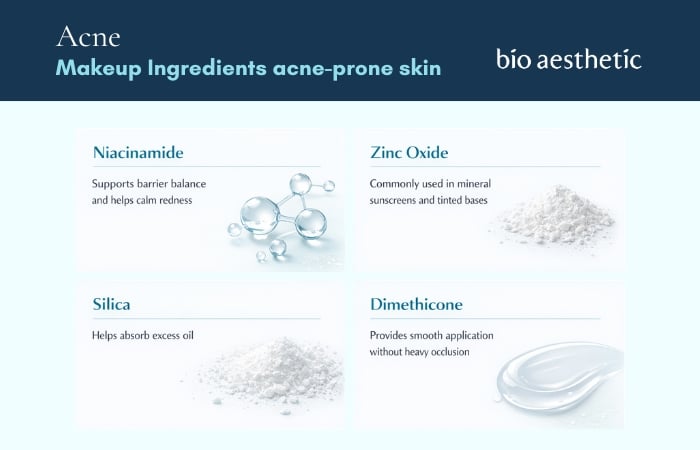
Makeup designed for acne-prone skin often includes ingredients that support barrier comfort and oil balance.
While individual tolerance varies, many people find these ingredients easier to wear:
- Niacinamide – helps calm redness and support barrier balance
- Zinc oxide – often found in mineral sunscreens or tinted bases
- Silica – helps absorb excess oil
- Dimethicone – provides smooth application without heavy occlusion
These ingredients are commonly used in modern formulations designed for oily or acne-prone skin.
Application tips for humid climates
Singapore’s humidity can affect how makeup sits on the skin. Heavy layers can trap sweat and oil, increasing congestion.
Helpful habits include:
- Apply thin layers instead of full coverage in one step
- Use blotting papers rather than adding more powder repeatedly
- Choose breathable textures such as fluids or gel-based formulas
- Allow skincare products to absorb before applying makeup
How to remove makeup without worsening acne
Proper removal is often more important than the makeup itself. Leaving residue overnight can trap sweat, oil, and bacteria in pores.
| Removal Step | Why It Matters |
|---|---|
| Gentle first cleanse | Helps dissolve sunscreen and makeup |
| Second cleanse | Removes remaining oil and debris |
| Avoid harsh scrubbing | Prevents irritation and redness |
| Use clean tools | Dirty brushes or sponges can spread bacteria |
When makeup isn’t the main issue
If breakouts continue despite using acne-friendly makeup and removing it properly, the underlying cause may not be makeup itself. Hormones, inflammation, or persistent pore congestion may require a more structured approach.
Learn more about structured acne management here:
Acne treatment plan
FAQs: Makeup for Acne-Prone Skin
Can makeup make acne worse?
It can if formulas are heavy or if makeup is not removed properly. Lightweight, non-comedogenic products and proper cleansing reduce this risk.
Is mineral makeup better for acne-prone skin?
Some people find mineral formulas lighter and less irritating, but the best option depends on how your skin responds.
Should I avoid foundation if I have acne?
Not necessarily. Many people with acne wear foundation comfortably when using breathable formulas and removing them properly at night.
Do makeup brushes cause breakouts?
Dirty brushes or sponges can contribute to irritation or bacteria buildup. Cleaning tools regularly helps reduce this risk.
Is it better to use powder or liquid foundation for acne-prone skin?
Both can work. Liquid formulas tend to look more natural, while powders may help control oil. The key is choosing lightweight, non-comedogenic formulas.
Can makeup help cover post-acne marks?
Yes. Tinted sunscreen, concealer, and lightweight foundation can help even skin tone while the skin heals.
Should I skip moisturiser before makeup if I have oily skin?
No. Skipping moisturiser can worsen oil imbalance. Lightweight moisturisers help create a smoother makeup base.
Last reviewed by Dr. Vijay Sampath, M.B.B.S, M.S (Gen Surg), DNB (Gen Surg), MRCS (Edinburgh) — February 2026