- A “purge” is a temporary increase in breakouts as clogged pores surface faster — it’s not guaranteed for everyone.
- Most purging (if it happens) shows up in weeks 1–4 and improves by weeks 6–12 with correct titration.
- Burning, swelling, intense redness or widespread peeling is more likely irritation — not purging.
- Start low, go slow, moisturise well, and avoid stacking too many actives early.
TL;DR: Retinoids can trigger an adjustment period that looks like “purging,” but many people quit because they titrate too fast or mistake irritation for purging. A step-by-step ramp-up, barrier support, and clear expectations can help you stay consistent and get the benefits without wrecking your skin.
What is a retinoid “purge” (and is it real)?
A retinoid purge refers to a temporary increase in breakouts when a retinoid speeds up skin cell turnover. Existing micro-comedones (tiny clogged pores you can’t always see yet) may surface sooner. Not everyone purges, and the term is sometimes used to describe irritation-related breakouts, which is a different issue.
Retinoid purge vs irritation: how to tell the difference
This distinction matters because the solution is different. Purging usually settles with time and consistent use. Irritation often worsens unless you reduce frequency and support the barrier.
| Feature | Likely Purging | More Likely Irritation |
|---|---|---|
| Where it appears | In your usual acne zones | New areas you don’t normally break out |
| Type of spots | Whiteheads/small pimples similar to your usual acne | Rash-like bumps, burning, stinging |
| Skin feel | Mild dryness is possible | Strong tightness, burning, rawness |
| Timeline | Typically improves by weeks 6–12 | Often worsens if you keep pushing through |
Retinoid purge timeline (realistic expectations)
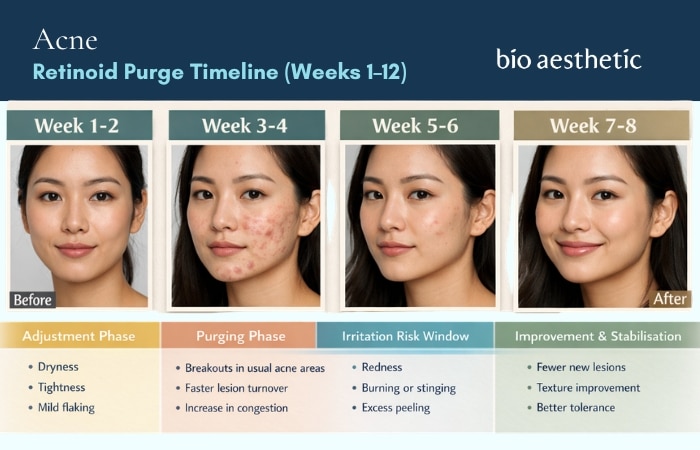
Everyone’s timeline varies, but a typical adjustment curve looks like this:
| Time | What you may notice | What to do |
|---|---|---|
| Week 0–1 | Dryness, mild flaking, slight sensitivity | Use a gentle cleanser, moisturise, avoid extra actives |
| Weeks 1–4 | If purging happens, small breakouts in usual zones | Hold your frequency steady; don’t “panic add” products |
| Weeks 4–8 | Breakouts should begin settling; texture may improve | Increase frequency only if skin is calm |
| Weeks 8–12 | More stable skin; fewer new breakouts; smoother pores | Maintain routine; review if persistent inflammation continues |
| 3–6 months | More consistent improvements and fewer “surprise” flares | Stick to a sustainable schedule; reassess goals |
How to titrate retinoids step-by-step (without quitting)
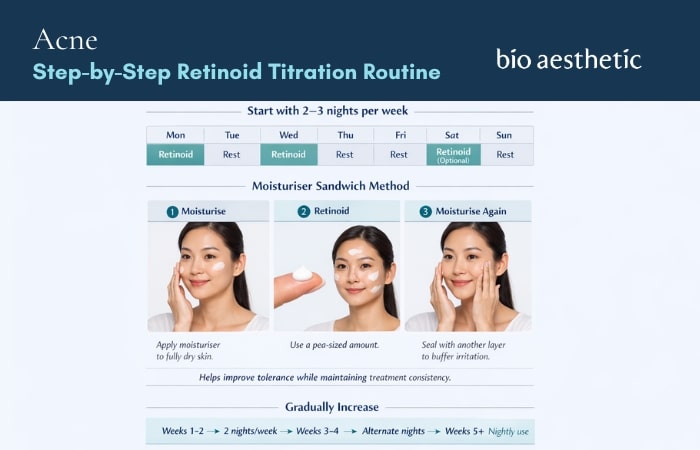
A common reason people fail retinoids is starting too frequently. A simple titration approach reduces irritation while keeping you consistent.
Step 1: Start with a low frequency
Start with 2 nights per week for the first 2 weeks. If your skin remains calm (no burning, rawness, or severe peeling), move up gradually.
Step 2: Increase slowly (only if your barrier is calm)
Move to 3 nights per week for another 2–3 weeks. If irritation is building, go back a step — reducing frequency is not “failure,” it’s barrier management.
Step 3: Use the “moisturiser sandwich” if you’re sensitive
If you’re easily irritated, apply moisturiser before and after the retinoid. This can reduce sting and help you stay consistent.
Step 4: Keep the rest of your routine simple
During the first 6–8 weeks, avoid stacking strong acids, harsh scrubs, or multiple new actives. Let the retinoid be the main variable.
Common mistakes that make purging feel worse
- Using retinoids nightly from day one
- Combining retinoids with multiple acids or harsh exfoliants early
- Skipping moisturiser because skin is “oily”
- Switching products too frequently (you can’t troubleshoot what’s causing what)
- Applying to damp skin (can increase irritation)
When to pause or seek medical advice
If you develop intense burning, swelling, cracking, or widespread redness, this is more likely irritation than purging. Reducing frequency, improving barrier care, or pausing briefly may be appropriate. If acne is persistent, painful, or scarring — or if you’re unsure what you’re experiencing — a structured review can help guide next steps.
Learn more about doctor-led acne management here: /acne-treatment/.
FAQs: Retinoid Purge Timeline
How long does a retinoid purge last?
If purging happens, it often appears within weeks 1–4 and begins improving by weeks 6–12 when titration is done correctly.
Is purging guaranteed?
No. Many people experience dryness or mild sensitivity without a noticeable purge.
What’s the difference between purging and breaking out from irritation?
Purging tends to show up in your usual acne zones and improves over time. Irritation often causes burning, rawness, and breakouts in new areas, and it worsens if you keep pushing through.
Should I stop retinoids if I purge?
Not necessarily. If symptoms are mild and consistent with purging, staying steady with a gentle routine can help. If irritation is significant, reduce frequency and support the barrier.
Can I use acids (AHA/BHA) while starting retinoids?
Many people do better avoiding strong acids during the first 6–8 weeks. If you want to use both, consider alternating nights and keeping frequency low.
Why does my skin feel oily and dry at the same time?
This is common when the barrier is stressed. Skin may produce more oil while still feeling tight or flaky. Consistent moisturising usually helps.
When should I see a doctor?
If acne is painful, persistent, scarring, or if you’re unsure whether you’re experiencing purging vs irritation, a doctor-led review can help guide a safer plan.