- Teen acne is common in Singapore due to puberty hormones, humidity, sweat and occlusion (e.g., masks).
- Mild acne often improves with consistent OTC routines in 4–6 weeks.
- Persistent, painful or spreading acne may need doctor-led care to reduce scarring risk.
- Doctor-led plans are usually step-based and tailored, not “one-size-fits-all”.
TL;DR: Teen acne is extremely common in Singapore, but not all breakouts are “just a phase.” Over-the-counter (OTC) products can be enough for mild cases, but persistent or inflamed acne often benefits from medical guidance to prevent long-term marks and scarring. This guide explains when to stay with OTC care, when to escalate, and what doctor-led care typically involves.
Why Teen Acne Is So Common in Singapore
During puberty, rising androgen hormones increase oil (sebum) production. In Singapore’s hot and humid climate, oil mixes easily with sweat and dead skin cells, which can clog pores and trigger inflammation.
School sports, outdoor activities, long hours in air-conditioned classrooms followed by humid commutes, and mask friction can all aggravate breakouts.
Teen acne commonly appears on the forehead and nose (T-zone), cheeks, chin and jawline. Chest and back acne are also frequent, especially among active teens who sweat often.
What Counts as “Normal” Teen Acne
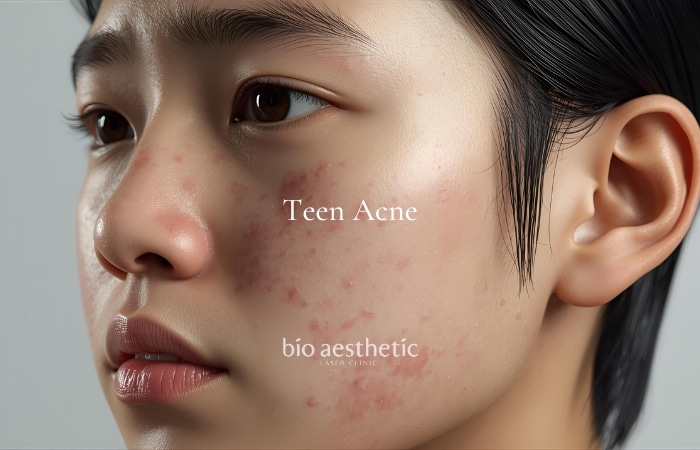
Some acne during teenage years is expected. “Normal” teen acne usually comes and goes within weeks, is not very painful, improves gradually with simple skincare, and does not leave persistent dark marks or texture changes.
When acne fits this pattern, OTC care is often sufficient.
When OTC Products Are Usually Enough
OTC routines work best when acne is mild, superficial, and improving within 4–6 weeks. OTC products mainly support oil control and surface congestion.
The key is consistency and keeping routines simple—overusing products often leads to irritation that worsens acne.
| OTC Option | What It Helps With | Best For | Key Limitation |
|---|---|---|---|
| Gentle cleanser | Removes oil, sweat and daily buildup | Daily maintenance | Won’t treat deeper inflammation |
| Salicylic acid (BHA) | Unclogs pores, reduces congestion | Blackheads, whiteheads | Overuse can irritate or dry the skin |
| Low-strength benzoyl peroxide | Reduces surface bacteria and inflammation | Mild inflamed pimples | Can cause dryness/redness if used too frequently |
| Oil-free moisturiser | Supports skin barrier and reduces irritation | All skin types | Not an acne treatment on its own |
Signs It’s Time to See a Doctor
Teen acne should be medically reviewed when breakouts become persistent, more inflamed, or start leaving marks.
In Singapore’s climate, frequent sweating and humidity can speed up inflammation and prolong healing, which increases the risk of pigmentation and scarring.
Consider doctor-led care if you notice any of the following:
- Acne lasting longer than 6–8 weeks despite consistent OTC use
- Painful, deep, or nodular pimples (possible early cystic acne)
- Frequent new breakouts every week (little “quiet time” between flare-ups)
- Acne spreading to the chest or back
- Dark marks appearing after pimples heal
- Early texture changes suggesting scarring
- Acne affecting confidence, school life, or social comfort
OTC vs Doctor-Led Acne Care: What’s the Difference?
OTC routines are designed for general use and typically address mild acne.
Doctor-led care, on the other hand, starts with a personalised assessment to identify acne type and triggers, then builds a step-based plan to control inflammation early and prevent long-term skin changes.
| Aspect | OTC Care | Doctor-Led Care |
|---|---|---|
| Acne severity addressed | Mild | Mild → severe |
| Personalised diagnosis | No | Yes |
| Controls deeper inflammation | Limited | Targeted |
| Scarring prevention focus | Limited | High |
| Adjusted as teen grows | No | Yes |
| Suitable for cystic acne | No | Yes |
Types of Doctor-Led Acne Treatments for Teens (Educational Overview)
Seeing a doctor doesn’t automatically mean “strong treatment.” Many teen acne plans begin conservatively and are adjusted over time based on response and tolerance.
The goal is to reduce inflammation safely, minimise irritation, and prevent recurrent flares that lead to marks and scars.
| Treatment Type | What It Does | When It’s Used | Teen Suitability |
|---|---|---|---|
| Prescription topical creams | Reduce inflammation and unclog pores | Persistent mild–moderate acne | Common first step |
| Short-term oral medication | Controls deeper inflammation | Widespread or painful acne | Carefully selected |
| Medical extractions / facials | Clears congestion more safely than DIY squeezing | Resistant blackheads and clogged pores | Supportive option |
| Mild chemical peels | Improves congestion and early marks | Acne with early pigmentation/texture concerns | Doctor-guided |
| Long-term acne management plan | Prevents recurrence and reduces scarring risk | Recurrent or severe acne | Ideal approach |
Why Early Medical Care Matters for Teens

Teen skin can heal well, but repeated inflammation increases the likelihood of post-acne marks and permanent acne scars.
Early doctor-led care often results in less overall treatment because acne is controlled before it escalates.
This is particularly helpful for teens whose acne flares frequently in Singapore’s climate.
Common Concerns Parents Have
Parents often worry that a doctor visit means aggressive medication or long-term dependence.
In reality, teen acne care is usually step-based, conservative, and adjusted for age and sensitivity.
The focus is prevention and stability—reducing unnecessary inflammation, marks, and scarring over time.
When to Move from OTC to Doctor-Led Care (Quick Summary)
| Situation | OTC Enough? | Doctor-Led Care? |
|---|---|---|
| Occasional pimples | ✔ Yes | ❌ Not needed |
| Acne improving in 4–6 weeks | ✔ Yes | ❌ |
| Persistent acne > 8 weeks | ❌ | ✔ |
| Painful or cystic-type acne | ❌ | ✔ |
| Acne leaving dark marks | ❌ | ✔ |
| Acne affecting confidence | ❌ | ✔ |
If you’d like to explore structured care options, you can refer to our acne information page here: doctor-led acne management plan.
Last reviewed by Dr. Vijay Sampath, M.B.B.S, M.S (Gen Surg), DNB (Gen Surg), MRCS (Edinburgh) — November 2025
FAQs: Teen Acne & When to See a Doctor in Singapore
Is teen acne normal in Singapore?
Yes. Puberty hormones combined with Singapore’s humidity and frequent sweating make acne very common among teenagers.
How long should teens try OTC products before seeing a doctor?
If there’s no clear improvement after about 6–8 weeks of consistent OTC use, or if acne is worsening, a medical review is recommended.
Does seeing a doctor mean strong medication immediately?
Not necessarily. Many doctor-led plans begin with topical options and adjust step-by-step based on response, tolerance, and acne severity.
Can teen acne leave permanent scars?
Yes, especially if acne is inflamed, deep, or repeatedly picked. Early control of inflammation reduces scarring risk.
Why does acne flare during exams or stressful periods?
Stress can influence hormones and inflammation, which may increase oil production and worsen breakouts in some teens.
Is it okay to pop pimples?
It’s best to avoid popping. Picking increases inflammation, raises the risk of dark marks, and may contribute to scarring.
Should teens stop moisturising in humid weather?
No. Skipping moisturiser can weaken the skin barrier and sometimes increase oiliness. Choose lightweight, non-comedogenic textures.
What if acne is mostly on the back or chest?
Body acne is common in active teens. If it’s persistent, painful, or leaving marks, doctor-led guidance can help prevent longer-term issues.
Can diet alone fix teen acne?
Diet can play a supporting role, but acne is mainly driven by hormones, oil production and inflammation. A balanced approach works best.
When is the best time to see a doctor?
As soon as acne becomes persistent, painful, or emotionally distressing, or if it is leaving marks or early scars.